


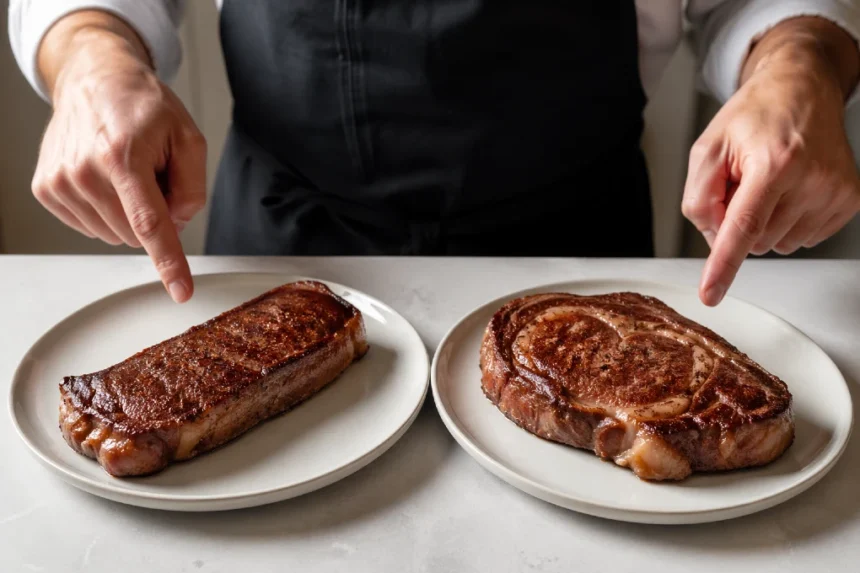
When people compare New York Strip vs Ribeye, they are usually asking one simple question: which steak is actually better on the plate? Not just which one sounds more expensive, or which one looks better in the butcher case, but which cut gives you the flavor, tenderness, juiciness, and eating experience you really want.
- What Is a New York Strip Steak?
- What Is a Ribeye Steak?
- New York Strip vs Ribeye: Main Differences at a Glance
- Flavor: Which Steak Tastes Better?
- Texture: Which One Feels Better When You Eat It?
- Fat and Marbling: The Biggest Difference
- Tenderness: Is Ribeye More Tender Than New York Strip?
- Which Steak Is Better for Grilling?
- Which Steak Is Better for Pan-Searing?
- Cooking Temperature: What Doneness Works Best?
- Price: Is New York Strip or Ribeye More Expensive?
- Nutrition: Which Steak Is Leaner?
- Best Seasoning for New York Strip vs Ribeye
- Real-World Scenario: Steakhouse Dinner
- Real-World Scenario: Cooking at Home
- Best Cooking Method for New York Strip
- Best Cooking Method for Ribeye
- Common Mistakes to Avoid
- New York Strip vs Ribeye for Meal Prep
- Which Steak Should You Buy?
- FAQs About New York Strip vs Ribeye
- Conclusion
Both steaks are premium cuts. Both can be grilled, pan-seared, broiled, or cooked in a cast-iron skillet. Both show up on steakhouse menus because they deliver that rich, satisfying beef flavor people expect from a proper steak dinner.
But they are not the same.
A New York strip is firmer, leaner, and has a bold beefy bite. A ribeye is richer, more marbled, and usually juicier because of its higher fat content. If you like a clean, meaty chew, the strip may be your winner. If you want buttery texture and deep richness, ribeye has the edge.
The best choice depends on how you like your steak, how you cook it, and what kind of meal you are planning.
What Is a New York Strip Steak?
A New York strip steak comes from the short loin area of the cow. This part of the animal does not do as much heavy work as tougher cuts like brisket or chuck, which is why the meat is naturally tender.
The New York strip is also known by several other names, including strip steak, Kansas City strip, top loin steak, club steak, and shell steak. According to Beef. It’s What’s For Dinner, the boneless strip steak is cut from the top loin or strip loin and is known for being tender, lean, and suitable for grilling.
That leaner structure is what gives the New York strip its signature bite. It is not as soft or fatty as ribeye, but it has a satisfying chew that many steak lovers prefer.
A good New York strip often has a fat cap along one side. That fat adds flavor as it cooks, but the inside of the steak is usually more uniform and less marbled than ribeye.
This makes it a great choice for people who want a steak that tastes rich without feeling overly fatty.
What Is a Ribeye Steak?
A ribeye steak comes from the rib section of the cow. In the New York Strip vs Ribeye comparison, ribeye is usually the richer and juicier choice because it has generous marbling, a tender texture, and a deep, beefy flavor.
Beef. It’s What’s For Dinner describes ribeye as one of the most popular and tender cuts, with marbling that adds flavor. It is commonly prepared by simple seasoning and grilling.
That marbling is the key difference. Marbling refers to the thin white streaks of fat inside the meat. When the steak cooks, that fat melts into the muscle fibers. This gives ribeye its soft texture, deep beef flavor, and juicy mouthfeel.
A ribeye may include different muscle sections, including the eye of the ribeye and the ribeye cap. The cap is especially prized because it is tender, fatty, and intensely flavorful.
If you want the kind of steak that feels luxurious with just salt, pepper, and heat, ribeye is hard to beat.
New York Strip vs Ribeye: Main Differences at a Glance
The debate around New York Strip vs Ribeye usually comes down to fat, tenderness, flavor, and texture.
| Feature | New York Strip | Ribeye |
|---|---|---|
| Main area of cow | Short loin | Rib section |
| Texture | Firm, tender, slightly chewy | Softer, richer, more buttery |
| Fat level | Moderate | Higher |
| Marbling | Less internal marbling | More internal marbling |
| Flavor | Bold, clean, beefy | Rich, juicy, fatty, intense |
| Best cooking style | Grilling, pan-searing, broiling | Grilling, cast iron, reverse sear |
| Best for | People who like leaner steak | People who want maximum richness |
Neither steak is automatically better for everyone. The better choice depends on what you enjoy most.
If you want a steak with a stronger chew and balanced fat, the New York strip works beautifully. If you want a steak that stays juicy and rich even with simple seasoning, ribeye usually wins.
Flavor: Which Steak Tastes Better?
Flavor is where New York Strip vs Ribeye gets interesting.
The New York strip has a clean, classic steak flavor. It tastes beefy, slightly mineral, and bold without being too rich. Because it has less internal fat than ribeye, the flavor comes more from the meat itself than from melted fat.
That makes the strip a favorite for people who like a more traditional steakhouse bite.
Ribeye, on the other hand, is more indulgent. The extra marbling gives it a deeper, richer taste. As the fat melts, it carries flavor through the steak and creates a juicy, almost buttery finish.
For pure flavor intensity, ribeye usually wins.
But if you find very fatty steaks too heavy, the New York strip may taste better to you. It has enough fat to feel satisfying, but not so much that it overwhelms the beef.
A simple way to think about it:
New York strip tastes more meaty.
Ribeye tastes more rich.
Texture: Which One Feels Better When You Eat It?
Texture matters just as much as flavor.
A New York strip has a firmer texture. It is tender, but it still gives you a real steak chew. That chew is not a bad thing. In fact, many steak lovers enjoy it because it makes each bite feel substantial.
Ribeye is softer and more forgiving. Because of its marbling, it often feels juicier and more tender. Even if it is cooked slightly past medium-rare, it can still taste moist because the fat protects the meat.
This is one reason ribeye is popular with home cooks. It is harder to dry out than leaner cuts.
In the New York Strip vs Ribeye texture comparison, ribeye wins for softness. New York strip wins for people who prefer a firmer, steakhouse-style bite.
Fat and Marbling: The Biggest Difference
The biggest difference between these two cuts is fat.
Ribeye has more marbling. That is why it is richer, juicier, and often more flavorful. New York strip is leaner, though it usually has a fat strip along the edge.
USDA FoodData Central provides nutrient data for beef cuts and includes listings for beef short loin, also known as NY strip steak, as well as other beef products. Nutritional values can vary depending on trimming, grade, and cooking method.
The fat difference also changes how each steak cooks.
Ribeye fat melts during cooking, helping the steak stay juicy. But that same fat can also cause flare-ups on the grill if the heat is too high.
New York strip cooks more evenly because it has less internal fat. However, it can become dry if overcooked.
So when comparing New York Strip vs Ribeye, remember this simple rule:
More marbling means more richness.
Less marbling means a cleaner bite and firmer texture.
Tenderness: Is Ribeye More Tender Than New York Strip?
Yes, ribeye is usually more tender than New York strip, especially when both steaks are cooked properly.
The rib area naturally produces tender meat, and the marbling adds extra softness. When the fat melts, it makes the steak feel more tender even if the muscle fibers are not dramatically different.
New York strip is still a tender cut. It is not tough like flank steak or round steak. But it has a more noticeable chew than ribeye.
If you are cooking for someone who wants a soft, juicy steak with less effort, ribeye is a safer choice.
If you are cooking for someone who enjoys a firm, satisfying bite, New York strip is excellent.
Which Steak Is Better for Grilling?
Both steaks are great for grilling, but they behave differently over flame.
New York strip is easier to manage on a grill because it has less internal fat. It sears well, develops a nice crust, and usually cooks evenly. The side fat cap can be rendered slowly by holding that edge against the heat for a minute or two.
Ribeye tastes amazing on the grill because the fat melts and creates smoky, juicy flavor. But it needs more attention. Too much dripping fat can cause flare-ups, which may burn the outside before the inside reaches the right temperature.
For grilling beginners, New York strip may be easier.
For experienced grillers who know how to manage heat zones, ribeye can deliver a deeper flavor.
The best method is to use two-zone heat. Sear the steak over high heat, then move it to a cooler side of the grill until it reaches your preferred doneness.
Which Steak Is Better for Pan-Searing?
Pan-searing is one of the best ways to cook both cuts.
A New York strip does well in a hot cast-iron skillet because the leaner meat builds a beautiful crust. Add butter, garlic, and herbs near the end, then baste the steak for extra flavor.
Ribeye also works beautifully in a skillet, but the higher fat content means it can release more grease. That is not necessarily a problem. In fact, the rendered fat can help create a fantastic crust.
For ribeye, avoid overcrowding the pan. Give the steak enough space so it sears instead of steams.
In the New York Strip vs Ribeye pan-searing debate, ribeye gives more richness, while strip gives a cleaner crust and firmer finish.
Cooking Temperature: What Doneness Works Best?
Both steaks are best when cooked to medium-rare or medium.
For most steak lovers, medium-rare is the sweet spot. The steak stays juicy, the fat starts to melt, and the texture remains tender.
Here are common target temperatures:
| Doneness | Internal Temperature |
|---|---|
| Rare | 120°F to 125°F |
| Medium-rare | 130°F to 135°F |
| Medium | 140°F to 145°F |
| Medium-well | 150°F to 155°F |
| Well-done | 160°F and above |
For ribeye, medium can actually work well because the fat needs enough heat to render properly. A rare ribeye may taste chewy or greasy if the fat has not melted enough.
For New York strip, medium-rare is often ideal because the leaner meat can dry out if pushed too far.
Always rest the steak for 5 to 10 minutes after cooking. This helps the juices settle instead of running out the moment you cut into it.
Price: Is New York Strip or Ribeye More Expensive?
Prices vary by store, region, grade, butcher, and season. But ribeye is often slightly more expensive because of its popularity, marbling, and rich eating quality.
New York strip can also be pricey, especially if it is USDA Prime, dry-aged, grass-fed, or sold at a specialty butcher.
If you are buying steak for a family dinner, New York strip may offer better value because it has less waste and more consistent lean meat.
If you are buying steak for a special occasion, ribeye may feel more impressive because of its richness and juiciness.
For value, New York strip often wins.
For indulgence, ribeye wins.
Nutrition: Which Steak Is Leaner?
New York strip is generally leaner than ribeye. That does not automatically make it “healthy” or “unhealthy,” but it does matter if you are watching fat intake.
Ribeye usually contains more fat because of its marbling. That fat adds flavor, but it also increases calories.
USDA FoodData Central is a useful reference for comparing beef nutrition because it includes data for different beef cuts, preparation styles, and trimming levels.
The exact nutrition depends on:
• Steak thickness
• Beef grade
• Amount of visible fat
• Cooking method
• Whether butter or oil is added
• Portion size
A 6-ounce lean strip steak will not be the same nutritionally as a 16-ounce heavily marbled ribeye cooked in butter.
If you want a leaner steak dinner, choose New York strip and trim excess edge fat after cooking.
If you want richer flavor and do not mind the extra fat, ribeye is the better match.
Best Seasoning for New York Strip vs Ribeye
Good steak does not need complicated seasoning.
Salt is the most important ingredient. It draws out moisture at first, then helps the steak form a better crust as the surface dries.
For both cuts, a simple seasoning works well:
• Kosher salt
• Fresh black pepper
• Garlic powder, if desired
• A little neutral oil before searing
• Butter and herbs for finishing
Ribeye already has plenty of richness, so avoid overpowering it with heavy marinades.
New York strip can handle stronger seasoning because it has a cleaner beef profile. A dry rub with cracked pepper, garlic, smoked paprika, and a touch of brown sugar can work well for grilling.
For the best result, season the steak at least 40 minutes before cooking, or salt it the night before and leave it uncovered in the fridge. This dry-brining method helps build a better crust.
Real-World Scenario: Steakhouse Dinner
Imagine you are at a steakhouse and choosing between a New York strip and a ribeye.
If you want a classic steakhouse experience with a firm bite, bold beef flavor, and a clean finish, order the New York strip.
If you want a richer plate with more juiciness, more fat, and a softer texture, order the ribeye.
For sides, the New York strip pairs well with mashed potatoes, creamed spinach, roasted mushrooms, or a sharp salad.
Ribeye pairs better with lighter sides because the steak itself is rich. Think grilled asparagus, roasted vegetables, chimichurri, or a simple wedge salad.
This is where New York Strip vs Ribeye becomes less about rules and more about balance.
The richer the steak, the simpler the sides should be.
Real-World Scenario: Cooking at Home
For a weeknight steak dinner, New York strip may be the easier option. It cooks quickly, gives less smoke than ribeye, and feels satisfying without being too heavy.
For a weekend dinner, ribeye feels more special. It rewards slower cooking, reverse searing, or grilling over charcoal.
If you are cooking for guests, ribeye often creates a bigger wow factor. The marbling looks impressive, and the flavor is bold.
If you are cooking for someone who does not like fatty cuts, New York strip is safer.
A practical tip: buy steaks that are at least 1 to 1.5 inches thick. Thin steaks overcook quickly, especially New York strip.
Best Cooking Method for New York Strip
New York strip is excellent when cooked hot and fast.
Start with a dry steak. Pat it with paper towels before seasoning. Moisture on the surface can block browning.
Heat a cast-iron skillet until very hot. Add a small amount of high-smoke-point oil, then sear the steak for 2 to 3 minutes per side. Add butter, garlic, and rosemary near the end.
For grilling, sear both sides over high heat, then finish over indirect heat if needed.
Let it rest before slicing. Cut against the grain for a more tender bite.
Best Cooking Method for Ribeye
Ribeye benefits from enough heat to render the fat.
A reverse sear is a great method. Cook the steak slowly in a low oven until it is close to your target temperature, then sear it in a hot pan or on a grill.
This works especially well for thick ribeyes because it gives the fat time to soften without burning the outside.
You can also grill ribeye over two-zone heat. Start it on the cooler side, then finish with a strong sear.
Because ribeye is fatty, keep an eye out for flare-ups. Move the steak if flames get too aggressive.
Common Mistakes to Avoid
Even premium steak can turn out disappointing if it is cooked carelessly.
Avoid these mistakes:
• Cooking straight from the fridge without letting the steak sit briefly
• Not drying the surface before searing
• Using low heat for the sear
• Cutting into the steak immediately after cooking
• Over-seasoning a high-quality ribeye
• Overcooking a lean New York strip
• Ignoring steak thickness
• Forgetting carryover cooking
Carryover cooking means the steak continues to rise in temperature after it leaves the heat. Pull it a few degrees early so it does not overshoot.
New York Strip vs Ribeye for Meal Prep
Steak is best fresh, but leftovers can still be useful.
New York strip works better for steak salads, sandwiches, rice bowls, and wraps because it is leaner and slices neatly.
Ribeye leftovers are flavorful, but the fat can firm up in the fridge. Reheat it gently so the texture does not become greasy or tough.
For next-day meals, slice steak thinly and warm it slowly in a skillet with a splash of broth or butter.
Do not microwave steak for too long. It can turn rubbery quickly.
Which Steak Should You Buy?
Buy New York strip if you want:
• A leaner premium steak
• A firmer bite
• Bold beef flavor
• Easier grilling
• Better value for money
• Less internal fat
Buy ribeye if you want:
• Maximum juiciness
• Rich marbling
• Buttery texture
• Deep steakhouse flavor
• A more indulgent meal
• A steak that is more forgiving to cook
The best answer to New York Strip vs Ribeye is not the same for every person.
For flavor and richness, ribeye usually wins.
For texture balance, value, and clean beef flavor, New York strip is a strong choice.
FAQs About New York Strip vs Ribeye
Is New York strip better than ribeye?
New York strip is better if you prefer a leaner steak with a firmer bite and bold beef flavor. Ribeye is better if you want more marbling, juiciness, and richness.
Is ribeye more tender than New York strip?
Yes, ribeye is usually more tender because it has more internal fat. That marbling melts during cooking and gives the steak a softer texture.
Which steak has more flavor?
Ribeye usually has more flavor because fat carries flavor. New York strip has a cleaner, beefier taste, while ribeye tastes richer and more indulgent.
Which steak is healthier?
New York strip is generally leaner, so it may be the better option for people watching fat or calorie intake. The healthiest choice also depends on portion size, cooking method, and side dishes.
Which is better for grilling?
Both are excellent for grilling. New York strip is easier to control because it has less fat. Ribeye can taste richer on the grill but may cause flare-ups if the heat is too high.
Which steak is better for beginners?
New York strip is often easier for beginners because it cooks more evenly and creates less smoke. Ribeye is forgiving because of its fat, but it needs better heat control.
Conclusion
The New York Strip vs Ribeye debate comes down to what kind of steak experience you want.
Choose New York strip if you like a steak that is tender but still firm, bold but not too fatty, and satisfying without feeling overly rich. It is a dependable cut for grilling, pan-searing, and classic steak dinners.
Choose ribeye if you want the juiciest, richest, most indulgent steak on the plate. Its marbling gives it a buttery texture and deep flavor that many steak lovers consider the gold standard.
If you are cooking for a casual dinner, New York strip is practical, flavorful, and often better value. If you are cooking for a celebration, ribeye brings more luxury and richness.
In the end, the winner of New York Strip vs Ribeye depends on your taste. For flavor, ribeye has the advantage. For texture balance, New York strip makes a very strong case.
Both cuts can deliver an unforgettable meal when cooked with patience, proper heat, and simple seasoning. Whether you prefer the clean bite of a strip or the rich marbling of a premium steak, the real secret is choosing a quality cut and cooking it with care.