

If your dentures have started to move when you talk, rub against your gums, or feel different than they used to, you are not imagining it. A Denture Reline is one of the most common ways dentists improve the fit of dentures without replacing the entire appliance. It can help reduce slipping, improve comfort, and make everyday things like eating and speaking feel easier again. Many dental providers recommend checking denture fit regularly because the mouth naturally changes over time, and even a well-made denture can become loose as gums and supporting bone shift.
- What Is a Denture Reline?
- Why Dentures Become Loose or Uncomfortable
- What a Denture Reline Can Actually Do
- Signs You May Need a Denture Reline
- Soft vs Hard Denture Reline
- What Happens During the Denture Reline Process?
- How Long Does a Denture Reline Last?
- When a Denture Reline Is Not Enough
- Denture Reline Aftercare and Everyday Tips
- Common Questions About Denture Reline
- Final Thoughts on Denture Reline
For many people, the issue is not that the denture itself is “bad.” The issue is that the mouth it sits on has changed. When teeth are missing, the jawbone and soft tissues can gradually shrink, which affects how closely the denture base adapts to the gums. That is why a denture that once felt secure can later start clicking, rocking, or creating sore spots. In these situations, a Denture Reline can often restore the inner surface so it matches your mouth more accurately.
This article walks through what a Denture Reline actually does, who usually needs one, what the process feels like, how soft and hard relines differ, and when a reline is not enough. If you are trying to fix loose or uncomfortable dentures without rushing into a full replacement, this is often the first option worth understanding.
What Is a Denture Reline?
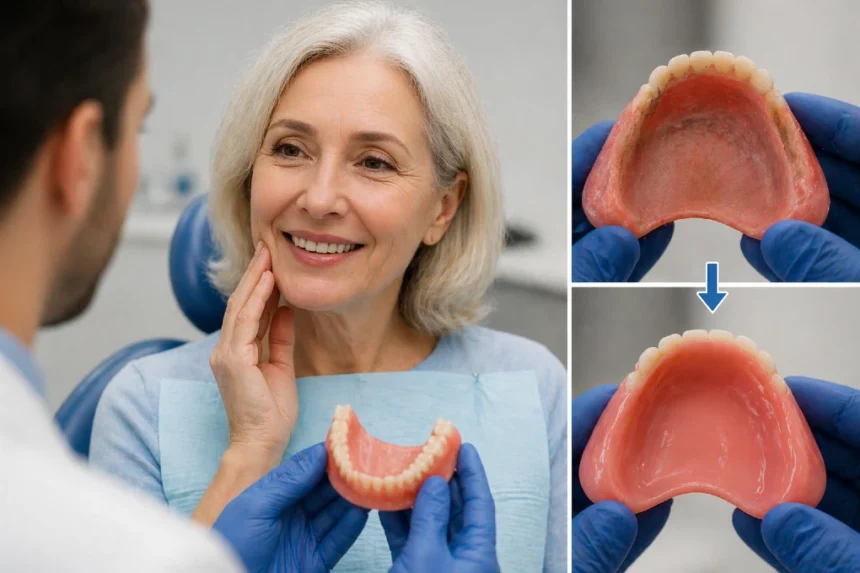
A Denture Reline is a dental procedure that reshapes the tissue side of a denture by adding new material to the inside surface. The goal is to improve the way the denture sits against your gums and underlying ridge. In simple terms, the teeth on the denture may stay the same, but the base that touches your mouth is updated so the fit becomes snugger and more comfortable.
This matters because dentures are not static devices. Your mouth changes over time due to normal bone resorption, tissue changes, tooth loss around a partial denture, aging, and even weight fluctuations or healing after dental work. A reline helps the denture keep up with those changes. Instead of forcing your gums to adapt to an old shape, the dentist modifies the denture to better fit your current anatomy.
People sometimes confuse a relining procedure with a repair or a remake, but they are not the same. A repair fixes a crack, broken tooth, or damaged section. A remake means creating a brand-new denture. A reline falls in between. It keeps the existing denture but improves the way it contacts the tissues. That makes it a practical solution when the denture teeth are still in acceptable shape and the main complaint is looseness or discomfort.
Why Dentures Become Loose or Uncomfortable
Loose dentures usually happen for a very ordinary reason. The shape of your gums and jaw changes. After natural teeth are removed, the bone that once supported them no longer gets the same stimulation, and that area can shrink with time. As the ridge changes, the denture base loses close contact with the tissue, which reduces stability and suction.
Another common issue is uneven pressure. Once a denture no longer sits evenly, some parts may rub too hard while other parts lift away. That can lead to sore spots, irritation, clicking during speech, difficulty chewing, or the constant feeling that the denture may shift out of place. NHS guidance specifically advises seeing a dentist if dentures slip, click, cause pain, or no longer fit properly.
Partial dentures can loosen for extra reasons. If natural supporting teeth move, wear down, or are lost, the balance of the appliance changes. Full dentures may also feel looser if they become worn, if the bite changes, or if the base no longer adapts well to the ridge. Over time, poor fit may also contribute to irritation and make it harder to keep the mouth healthy and comfortable.
Sometimes people try to live with the problem by using more adhesive. Denture fixative can be useful in some cases, but it is not a permanent answer for a denture that no longer fits well. If you find yourself using more product than before just to get through the day, that is often a sign you need a professional assessment rather than another temporary workaround. NHS sources note that adhesives may help with movement, but relining by a dentist may also be needed when looseness develops.
What a Denture Reline Can Actually Do
The biggest benefit of a Denture Reline is improved fit. When the inside of the denture is reshaped to match your mouth more closely, it can reduce movement and create a more secure feel. That alone can make a major difference in comfort, confidence, and daily function.
It can also help with sore or irritated areas. If the denture rocks or presses unevenly, your gums can become tender. A better fit spreads pressure more evenly, which may reduce friction and lessen the constant rubbing that leads to red spots and discomfort. That said, if you already have severe irritation, fungal infection, ulcers, or broken denture parts, those issues also need direct treatment and should not be ignored.
Many patients notice better chewing after a reline. Dentures that slide during meals can make people avoid certain foods or chew only on one side. When the base fits more securely, the denture often feels steadier during biting and chewing. Speech can improve too, especially when slipping or clicking has been making certain sounds feel awkward. These changes are practical, not cosmetic. They affect quality of life in very real ways.
There is also a financial and practical benefit. A reline is usually less extensive than replacing the entire denture. If the denture teeth, bite relationship, and overall structure are still in reasonable condition, relining can extend usability and delay the need for a full remake. Still, experts note that dentures do not last forever. Cleveland Clinic states that dentures often last around seven to ten years, and relines are commonly needed every one to two years or whenever fit changes become noticeable.
Signs You May Need a Denture Reline
You do not need to wait until your dentures become unbearable before asking about a Denture Reline. Often, the early signs are subtle.
You may need one if:
- Your dentures slip when you eat or speak
- They click while talking
- You are using more adhesive than you used to
- You notice sore spots or gum tenderness
- Food gets trapped more easily under the denture
- The fit feels different from morning to evening
- You avoid certain foods because chewing feels unstable
- The denture feels loose even though it is not broken
These symptoms are broadly consistent with clinical and patient guidance that advises review when dentures slip, click, cause pain, or no longer fit properly.
A practical example is someone who had a full upper denture made a few years ago and now feels it drop slightly while laughing or coughing. Another example is a partial denture wearer who starts getting one sore spot near a clasped tooth because the fit has shifted. In both cases, the appliance may still look fine, but the contact with the mouth is no longer as precise as it once was.
Soft vs Hard Denture Reline
There are two main kinds of Denture Reline procedures patients hear about: soft relines and hard relines.
Soft Denture Reline
A soft reline uses a more cushion-like material on the inside of the denture. It is often chosen when gums are especially tender, when the mouth is healing, or when a person has sharp or thin ridges that do not tolerate firm acrylic well. Hospital and dental guidance also notes that soft linings are used to provide comfort for people experiencing significant pain with a hard denture base.
Soft relines can feel gentler at first, but they also need careful cleaning and maintenance. Some cleaning products and abrasive methods may damage soft lining materials. That is one reason follow-up instructions matter so much.
Hard Denture Reline
A hard reline uses a firmer acrylic-like material that becomes part of the denture base. This type is often preferred for longer-term fit correction when the tissues are healthy enough to tolerate a standard base. Hard relines tend to be more durable than soft liners, though the best option depends on the patient’s oral condition, comfort, and treatment goals.
Which One Is Better?
Neither is “better” for everyone. A soft reline may be useful when comfort is the top priority and the tissues are irritated or delicate. A hard reline may be the more lasting answer when the goal is a stable long-term fit. The right choice depends on your gum condition, how long you have worn the denture, whether the ridge is thin or sore, and whether your dentist thinks the existing denture base is suitable for modification.
What Happens During the Denture Reline Process?
The process is usually straightforward, though the exact steps vary depending on whether the reline is done chairside or in a dental lab.
First, the dentist examines your mouth and the denture itself. They will want to know whether the denture is loose because of tissue change, wear, damage, bite problems, or a combination of issues. They may also check for ulcers, signs of oral thrush, gum inflammation, or pressure areas that need attention before or along with the reline.
Next, the inner surface of the denture is adjusted and an impression-like material may be used to capture the current shape of your gums. That information helps guide the new lining so the denture base sits more accurately against the tissues. In lab-based relines, the denture is often sent out and returned after the material is processed. In chairside relines, some of the work can be completed in the office on the same day.
After the reline, the dentist checks the fit, border extension, and bite. Minor adjustments are common. Even a good reline may need a follow-up visit because when a denture starts fitting more snugly again, pressure points can show up in areas that were not obvious before.
How Long Does a Denture Reline Last?
There is no universal rule because every mouth changes at a different pace. The American College of Prosthodontists states that there is no single evidence-based timetable that determines exactly how often dentures should be relined, rebased, or remade for every patient. Clinical judgment and the way the prosthesis adapts for the individual matter.
That said, many consumer-facing dental sources give a practical range. Cleveland Clinic notes that a denture reline is commonly needed every one to two years or whenever you notice fit changes. That should be seen as a general benchmark, not a strict deadline. Some people need attention sooner, especially after extractions, rapid ridge changes, or significant weight changes. Others may go longer if the fit remains stable and the tissues stay healthy.
The best habit is regular review. If your dentures are starting to move, hurt, or feel less reliable, it is worth getting them checked before the problem becomes bigger.
When a Denture Reline Is Not Enough
A Denture Reline can do a lot, but it cannot fix every denture problem.
If the denture is cracked, warped, badly worn, or has major bite issues, a reline may not solve the real cause of discomfort. Likewise, if the denture teeth are heavily worn down, the vertical dimension has changed, or the base is already at the limit of what can be safely modified, making a new denture may be the better long-term choice.
There are also cases where stability problems are linked to anatomy rather than just fit. For example, severe ridge resorption can make conventional dentures harder to retain even after a reline. In those situations, some patients may benefit from discussing implant-supported denture options with a dentist or prosthodontist. Implant-supported dentures are designed to provide more stability than traditional removable dentures because they attach to implants in the jaw.
This does not mean you should jump straight to implants. It simply means that if repeated relines are no longer giving you a useful result, it may be time to have a bigger conversation about alternatives.
Denture Reline Aftercare and Everyday Tips
A well-done Denture Reline works best when paired with good denture care. That includes cleaning the denture properly and paying attention to any new soreness.
Here are practical aftercare habits that matter:
- Clean dentures regularly with a brush and water, denture cleanser, or soap as directed
- Avoid using regular toothpaste on dentures because it can scratch the surface
- Remove dentures at night unless your dental professional has told you otherwise
- Rinse dentures after meals when possible
- Do not try to reshape, glue, or repair them yourself
- Book a review if pain, redness, bad odor, or persistent looseness continues
These points are supported by denture care guidance from Cleveland Clinic and multiple NHS resources, which advise removing dentures at night, cleaning them carefully, avoiding toothpaste on denture surfaces, and seeking professional help rather than trying home repairs.
Wearing dentures overnight may also raise the risk of plaque buildup, inflammation, oral thrush, and related problems, especially in older adults or people with dry mouth or reduced oral hygiene. NHS and ADA-adjacent patient resources consistently recommend removing removable dentures at night and cleaning them thoroughly.
If you notice white patches, persistent redness, a burning feeling, or cracks at the corners of the mouth, do not assume it is just “normal denture irritation.” Older people with dentures can develop oral thrush, and sore tissues should be assessed properly.
Common Questions About Denture Reline
Is a denture reline painful?
Most people do not describe it as a painful procedure, though it may feel unfamiliar. If your gums are already sore, the mouth may be tender during impressions or adjustments. The goal of the treatment is to improve comfort, not create more irritation. Any ongoing pain after the reline should be checked promptly.
Can I reline my dentures at home?
Over-the-counter kits exist, but professional sources strongly advise against fixing or adjusting dentures yourself. A poor home adjustment can damage the denture, worsen the fit, or create tissue problems that become harder to correct later.
How do I know if I need a reline or new dentures?
If the denture teeth and structure are still in decent condition and the main issue is looseness, a reline may be enough. If the denture is worn out, broken, poorly shaped, or no longer functions well overall, replacement may be more appropriate. A clinical exam is the only reliable way to tell.
Does adhesive replace the need for a denture reline?
No. Adhesive may help temporarily, but it does not correct the underlying mismatch between your denture and your gums. If you increasingly depend on adhesive just to get basic stability, it is worth booking a professional review.
Final Thoughts on Denture Reline
A Denture Reline is one of the most practical ways to deal with dentures that have become loose or uncomfortable. It can improve fit, reduce movement, ease sore spots, and make speaking and eating feel more natural again. For many people, it is the smart middle ground between “just put up with it” and “replace everything.”
The most important thing is not to ignore the signs. Dentures that slip, rub, click, or need constant adhesive are telling you something. Often, the answer is not a brand-new denture right away. It is a closer fit. And that is exactly what a Denture Reline is designed to provide. If you want to better understand the broader idea of a removable dental prosthesis, it helps to see where relining fits into long-term denture care.
Choosing the right time to act can save you from months of irritation and frustration. When your dentures stop fitting the way they once did, a professional review can tell you whether a Denture Reline is the right fix or whether another treatment path makes more sense. Either way, getting ahead of the problem usually leads to a better outcome than waiting until daily wear becomes a struggle.