
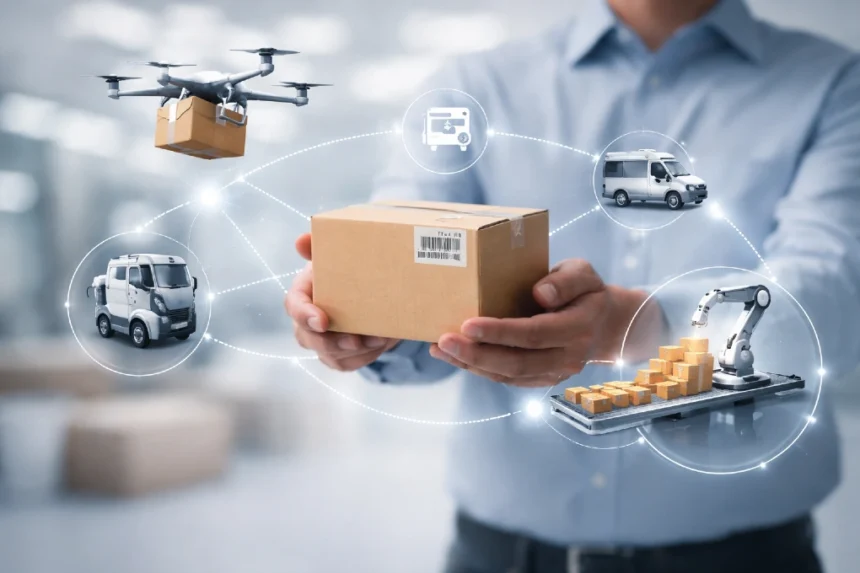
There was a time when “delivery” mostly meant one thing: ship the package to the customer’s front door and hope the timing worked out. That model still matters, of course, but it no longer covers the full reality of modern commerce. Today, businesses are under pressure to offer more flexible, affordable, and reliable ways to get orders into customers’ hands. That is exactly why Alternative Delivery Channels have become such a central part of retail, logistics, and customer experience strategy. Consumer research shows that cost, reliability, and flexibility now matter as much as, and often more than, pure speed. In fact, McKinsey reports that 90% of consumers are willing to wait two or three days if it helps them avoid shipping fees, and more than half care about being able to schedule deliveries.
- What Alternative Delivery Channels Really Mean
- Why They Matter More Than Ever
- The Main Types of Alternative Delivery Channels
- Why Customers Choose These Channels
- The Business Benefits Behind the Trend
- The Challenges Companies Still Face
- How Smart Brands Use Alternative Delivery Channels
- Practical Tips for Businesses Adopting New Fulfillment Options
- Where This Is Headed Next
- Conclusion
In practical terms, alternative delivery channels are the nontraditional paths businesses use to complete fulfillment. Instead of relying only on standard home delivery, brands can offer curbside pickup, buy online pick up in store, parcel lockers, pickup points, ship from store, local courier drop offs, scheduled delivery windows, and even subscription based replenishment models. These options are not just nice extras anymore. They increasingly shape whether a customer completes the purchase, returns for another order, or abandons the cart altogether. McKinsey found that more than 90% of consumers are likely to abandon purchases when shipping costs feel too high, while more than 65% may walk away when return policies are too rigid.
That shift is important because modern commerce is no longer built around a single channel. It is built around customer choice. The strongest retailers and direct to consumer brands are not asking whether home delivery still works. They are asking which mix of fulfillment channels makes the most sense for different products, locations, and buying situations.
What Alternative Delivery Channels Really Mean
At its core, the term refers to any fulfillment path outside the old one size fits all delivery model. A retailer might still use standard parcel shipping, but it adds other options that fit customer expectations more closely. That could mean pickup at a nearby store, collection from a locker, delivery to a workplace, or fulfillment from local inventory rather than a distant warehouse.
This matters because shoppers do not all want the same thing. Some want the cheapest option. Some want the fastest. Others want certainty more than speed. McKinsey’s 2024 consumer delivery findings show that on time arrival within the promised window ranks higher for satisfaction than pure speed, and many consumers are happy to trade a little speed for lower cost and better reliability.
That is why alternative delivery channels are not just logistics tools. They are demand shaping tools. They help businesses align fulfillment with how people actually shop.
Why They Matter More Than Ever
The biggest reason is simple: customer expectations matured faster than traditional delivery systems did. E commerce kept growing, mobile shopping kept rising, and buyers got used to having options at checkout. Adobe reported that U.S. online holiday spending reached a record $241.4 billion in 2024, up 8.7% year over year, showing just how large and competitive digital commerce has become.
As order volume grows, standard home delivery becomes harder to optimize across every scenario. It can be expensive in low density areas, inconvenient for people not home during the day, and operationally stressful during peak seasons. The final stretch of the journey, often called the last mile, is where much of the complexity lives. Businesses that rely on only one delivery method can end up paying more while giving customers less flexibility.
Alternative channels help solve that mismatch. They spread demand across multiple fulfillment methods, use inventory more intelligently, reduce failed deliveries, and create better checkout experiences. They also support profitability. When a customer chooses in store pickup or a parcel locker, the business may reduce last mile costs while improving convenience.
There is also a competitive angle. Retailers that give customers meaningful options tend to feel more responsive and modern. NRF notes that shoppers continue to use fulfillment methods such as buy online, pick up in store, with 49% saying they planned to use BOPIS during the holiday period covered by its research.
The Main Types of Alternative Delivery Channels
Buy Online, Pick Up In Store
This is one of the most established alternatives and still one of the most effective. Customers place the order online, then collect it at a store location. It works especially well for urgent purchases, everyday goods, apparel, electronics, and seasonal buying.
For the shopper, the value is obvious. There is no waiting at home, no shipping fee in many cases, and the product can often be picked up the same day. For the retailer, it can turn stores into active fulfillment assets instead of treating them only as sales floors.
BOPIS also creates secondary benefits. Customers who enter the store for pickup sometimes make additional purchases. It can reduce delivery expense and improve inventory turnover when systems are well connected.
Curbside Pickup
Curbside pickup became highly visible during the pandemic years, but it stayed relevant because it solved a genuine convenience problem. People liked the ability to shop online while keeping the pickup process quick and low effort.
It is especially useful for groceries, pharmacy, household items, and bulky purchases. The key challenge is execution. Poor handoff timing or weak parking workflows can ruin the experience. When done well, it feels fast, personal, and frictionless.
Parcel Lockers and Pickup Points
This channel is growing because it solves missed delivery problems. Rather than sending a parcel to the home, the package goes to a locker bank or staffed collection point where the customer picks it up on their own schedule. DHL’s 2025 e commerce trends reporting highlights growing interest in out of home options, especially parcel lockers and drop off points for delivery and returns.
Lockers are especially useful in dense urban areas, apartment heavy neighborhoods, commuter corridors, and places where secure home delivery is harder to guarantee. McKinsey also found that about 45% of urban consumers have online shipments delivered to places other than their home, including workplaces, stores, and delivery lockers.
Ship From Store
This is more of a backend channel than a customer facing label, but it is one of the smartest operational moves in omnichannel retail. Instead of shipping only from a central warehouse, retailers fulfill some orders from store inventory closer to the customer.
That can shorten delivery times and help businesses move slower selling stock from individual locations. McKinsey notes that alternatives such as ship from store and decentralized urban fulfillment can bring inventory closer to demand and support faster delivery models.
Scheduled and Time Window Delivery
Some orders are not urgent, but they are sensitive to timing. Furniture, groceries, meal kits, medical supplies, and high value items often benefit from narrow delivery windows or customer selected slots.
This channel matters because convenience is not just about speed. It is about control. McKinsey found that more than 50% of surveyed consumers place importance on being able to schedule deliveries.
Local Courier and Hyperlocal Delivery
For businesses operating within cities or metro regions, local courier networks can offer flexible same day or near same day delivery without the cost of building a national fast delivery network. This is especially useful for florists, pharmacies, restaurants, premium boutiques, electronics resellers, and urgent replacement items.
Still, same day is not automatically the best answer for every order. McKinsey’s analysis says same day delivery remains a relatively small part of the parcel market in most countries, often below 5%, and works best under specific urban and operational conditions.
Why Customers Choose These Channels
People often assume faster always wins, but that is not what the data shows. Customers usually want a balance of cost, convenience, reliability, and flexibility.
Here is what stands out most in current research:
| Customer priority | What it means for fulfillment |
|---|---|
| Low shipping cost | Free or low cost options often matter more than the fastest service |
| Reliable arrival | Customers care deeply about getting the item within the promised window |
| Flexibility | Pickup, scheduling, and simple returns can influence conversion |
| Convenience | Home, store, locker, or workplace delivery should fit real routines |
| Sustainability | A meaningful share of shoppers will pay a little extra for greener shipping |
McKinsey found that more than 95% of surveyed consumers prefer free standard shipping over paid expedited shipping, and more than one third are willing to pay an extra one or two dollars for more sustainable shipping.
That combination changes the conversation. Businesses should not think only in terms of “How do we deliver faster?” A better question is “How do we give customers the right fulfillment choice for this purchase?”
The Business Benefits Behind the Trend
Alternative delivery channels are not only about keeping customers happy. They can improve the economics of fulfillment when designed well.
One major benefit is cost control. Delivering every order to every doorstep through the same network is expensive. Pickup models and local inventory fulfillment can reduce shipping distance, lower failed delivery attempts, and improve labor productivity in the last stage of order completion.
Another benefit is resilience. A business with multiple delivery channels is less exposed when one method gets overloaded. That matters during seasonal peaks, weather disruptions, local congestion, or carrier bottlenecks.
There is also the inventory advantage. If a retailer can route orders across stores, warehouses, lockers, and partners, it gains more flexibility in how stock is used. That can reduce markdown risk and speed up sell through.
The broader market also reflects how much fulfillment infrastructure has expanded. A 2025 Universal Postal Union executive summary states that between 2020 and 2024, the global third party logistics market doubled in size, Amazon doubled its fulfillment capacity in 24 months, and micro fulfillment centers were projected to grow by more than 4000% by 2031.
The Challenges Companies Still Face
None of this is automatic. Alternative delivery channels only work when the operations behind them are connected. A retailer may offer store pickup, but if inventory visibility is weak, customers will face cancellations and delays. A brand may promise same day local delivery, but if order cutoff times are unclear, the offer becomes unreliable.
Technology integration is often the real dividing line. Businesses need accurate inventory data, route logic, order orchestration, point of sale integration, customer notifications, and return handling workflows. They also need clear rules for when each channel should be offered.
There is a branding risk too. Every delivery option shapes the customer’s impression of the business. If the pickup desk is confusing, the locker code arrives late, or the scheduled delivery misses its slot, the channel feels broken even if the order technically arrived.
Sustainability can be complicated as well. More delivery choices sound efficient, but fragmented networks can create environmental tradeoffs if they are not planned carefully. The Universal Postal Union notes that rapid growth in parallel fulfillment infrastructure came with measurable environmental costs, including a documented 25% increase in total air freight emissions in the period it analyzed.
How Smart Brands Use Alternative Delivery Channels
The strongest businesses usually do three things well.
First, they match the channel to the product. Urgent items may need local fast delivery. Bulky items may need scheduled windows. Fashion and general merchandise often work well with BOPIS or parcel lockers.
Second, they match the channel to the customer context. Urban shoppers may value lockers, workplace delivery, or tight time windows. Suburban families may prefer curbside pickup. Rural buyers may prioritize free shipping over speed. McKinsey found that more than 55% of rural consumers are willing to wait seven days or more as long as shipping is free.
Third, they treat fulfillment as part of the shopping experience, not just a warehouse function. The checkout page should present options clearly. The promised timing should be realistic. Notifications should reduce uncertainty, not create it.
Practical Tips for Businesses Adopting New Fulfillment Options
If a company wants to expand into alternative delivery channels, the smartest move is usually not launching everything at once. It is choosing the options that solve the biggest customer pain points first.
A useful rollout often looks like this:
- Start with one or two high impact options, such as BOPIS and scheduled delivery
- Use stores or local partners where inventory is already close to demand
- Make checkout messaging simple and specific
- Track channel level performance, not just overall delivery speed
- Measure repeat purchase behavior, failed deliveries, and margin by fulfillment type
- Build returns into the design from the start
This approach works because fulfillment is rarely improved by adding complexity for its own sake. It improves when businesses reduce friction for the right customer segments.
Where This Is Headed Next
The future of fulfillment will not be a single winning channel. It will be a coordinated mix of channels supported by smarter orchestration. Retailers and logistics providers are moving toward systems that decide, in real time, which option makes the most sense based on inventory location, delivery promise, customer preference, capacity, and cost.
That means alternative delivery channels will keep becoming more personalized. One customer may see free pickup today, locker delivery tomorrow, and home delivery next week based on product type and context. Another may receive incentives to choose a lower cost or more sustainable option.
The overall trend is clear. Modern commerce is not abandoning home delivery. It is surrounding it with better alternatives. The businesses that win will be the ones that stop treating fulfillment as a fixed back end function and start treating it as a flexible customer promise.
In the end, Alternative Delivery Channels matter because they reflect how people actually live. Not everyone is home at the same time. Not every product needs the same urgency. Not every order should move through the same network. The more intelligently a business responds to those differences, the stronger its customer experience and operating model become.
That is why the conversation has shifted. It is no longer just about shipping fast. It is about offering the right path, at the right moment, for the right order. And in modern commerce, that is often what turns fulfillment from a cost center into a real competitive advantage. In the final stage of last mile logistics, that flexibility can make all the difference for both margins and customer trust.
For brands, retailers, and logistics providers, the message is simple. Alternative delivery channels are no longer optional features added to impress customers. They are part of the core commerce model now. Businesses that design them thoughtfully can reduce friction, improve reliability, support growth, and stay aligned with what customers value most. Businesses that ignore them risk building a checkout and fulfillment experience that feels increasingly out of step with modern buying behavior.
Conclusion
Alternative Delivery Channels have become essential because modern shoppers want more than a basic delivery promise. They want choice, value, convenience, and confidence that the order will arrive in a way that fits their lives. Whether that means pickup, lockers, local courier service, store based fulfillment, or scheduled delivery, the goal is the same: create smarter, more flexible fulfillment that works for both the customer and the business. In modern commerce, the brands that offer the best delivery experience are often the ones that understand that a better channel mix can be just as powerful as a better product.