


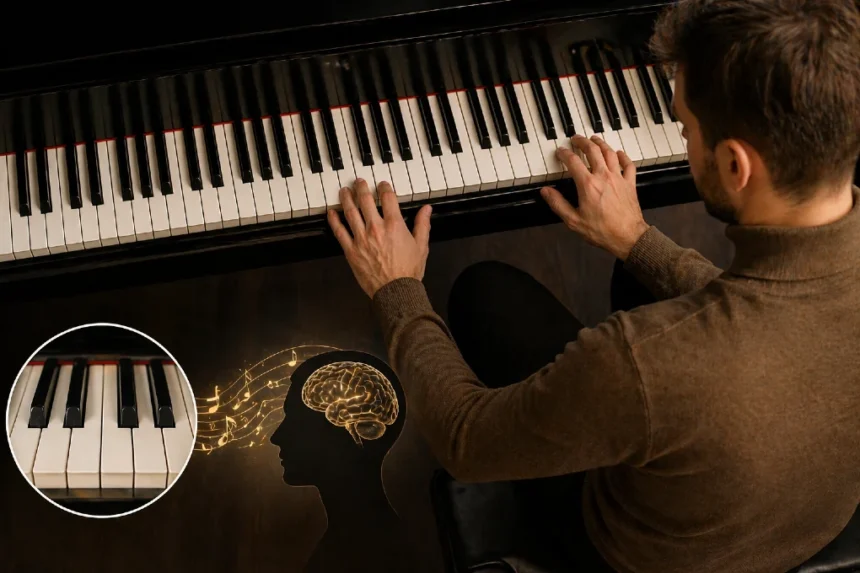
If you have ever sat in front of a keyboard and wondered, How Many Keys on a Piano, you are asking one of the most common and useful questions in music. It sounds simple at first, but the answer affects what you can play, how naturally you can learn, how much space you need at home, and even how quickly your hands adapt to real piano technique.
- How Many Keys on a Piano Is Standard?
- Why Pianos Did Not Always Have 88 Keys
- Why the Number of Keys Matters for Real Players
- 61 Keys vs 76 Keys vs 88 Keys
- Does Every Piano Have 88 Keys?
- Why 88 Keys Feels Different in Practice
- When Fewer Keys Are Actually Fine
- Common Myths About Piano Keys
- What Advanced Players Should Think About
- Quick Answer for Buyers
- Final Thoughts
- FAQs
The short answer is that a standard modern piano has 88 keys. That includes 52 white keys and 36 black keys. This layout gives the instrument a range of a little more than seven octaves, which is one reason the piano can handle everything from beginner exercises to advanced concert music. Britannica and Yamaha both identify 88 keys as the modern standard, while Yamaha also notes that this full keyboard became widely established by the 1890s after earlier pianos had smaller ranges.
But the more interesting part is not just How Many Keys on a Piano. It is why that number matters.
For some players, 61 keys are enough. For others, even 76 keys feel limiting. And if you are serious about building the right habits, the difference between a smaller keyboard and a full piano can be bigger than most beginners expect. Roland notes that 88 full-size keys support more demanding music and help develop proper left and right hand technique, while Casio describes 61, 76, and 88 keys as common sizes for different users and purposes.
How Many Keys on a Piano Is Standard?
When people ask How Many Keys on a Piano, they usually mean an acoustic piano such as an upright or grand piano. In that case, the standard answer is 88.
That 88-key layout is not random. It covers a very wide musical range, from the deep bass notes on the far left to the bright treble notes on the far right. Britannica describes the standard modern piano as having 88 keys and a compass of seven full octaves plus a few additional notes. Yamaha gives the range more specifically as 7¼ octaves on the modern keyboard.
Here is the basic breakdown:
| Piano key type | Number |
|---|---|
| White keys | 52 |
| Black keys | 36 |
| Total keys | 88 |
That is the version most students, teachers, composers, and performers think of when discussing How Many Keys on a Piano.
Why Pianos Did Not Always Have 88 Keys
One of the most useful things to understand is that the piano did not start with 88 keys. Early pianos had smaller ranges. Yamaha says Bartolomeo Cristofori’s early piano had only 54 keys, and the keyboard expanded over time as composers wanted more expressive possibilities. Britannica also notes that the instrument evolved over centuries in both design and range.
That historical shift matters because it explains why the modern answer to How Many Keys on a Piano became standardized. Music changed. Composers started writing pieces that reached farther into the low and high ends of the keyboard. Builders responded by extending the range. Eventually, 88 keys became the practical sweet spot between musical range, sound quality, and physical design. Yamaha even points out that adding more keys is not always musically useful because the extreme upper notes can become less distinct to the human ear.
So when someone asks How Many Keys on a Piano, they are really asking about the outcome of centuries of musical and mechanical evolution.
Why the Number of Keys Matters for Real Players
This is where the topic becomes practical.
Knowing How Many Keys on a Piano matters because the number of keys directly affects what you can play comfortably. A full piano gives you access to the complete note range used in most classical repertoire, much of advanced contemporary music, and the standard layout expected in lessons, exams, and performances. Roland says the full 88-key range helps players handle more demanding music and transition more smoothly to acoustic grand pianos.
For a beginner, this matters in a few real-world ways:
- Your hand position becomes familiar across the full keyboard.
- You learn where low accompaniment notes and high melody notes live.
- You avoid having to “upgrade your brain” later when moving from a smaller keyboard to a real piano.
- You can practice pieces without constantly transposing or skipping notes.
A lot of beginners buy a smaller keyboard because it is cheaper and easier to fit into a room. That can be a reasonable choice. But if your long-term goal is to actually play piano well, then the answer to How Many Keys on a Piano should shape your purchase decision, not just satisfy curiosity.
61 Keys vs 76 Keys vs 88 Keys
This is where search intent usually goes next.
People rarely ask How Many Keys on a Piano just for trivia. Most are comparing instruments. If that is what brought you here, this breakdown will help.
61-key keyboards
A 61-key keyboard is common for beginners, hobby users, children, and people who want portability. Yamaha markets 61-key beginner keyboards for first-time players, and Casio notes that 61-key models are popular because they are compact and easy to handle.
A 61-key keyboard can work if you want to:
- learn basic melodies and chords
- experiment with songwriting
- practice casually
- save money and space
But it also comes with limits. You may run out of notes when playing fuller arrangements, advanced classical music, or left-hand-heavy pieces.
76-key keyboards
A 76-key keyboard sits in the middle. It gives you more room than 61 keys without taking up as much space as a full piano. Yamaha and Casio both offer 76-key models as practical options, and Casio specifically says 76 keys can cover a wide variety of songs.
This can be a good option for:
- intermediate hobby players
- musicians who need portability
- people who want more range without going fully large
Still, if you are training seriously for piano literature, 76 keys may eventually feel incomplete.
88-key pianos and digital pianos
This is the closest you can get to the acoustic standard. Yamaha, Casio, and Roland all position 88-key digital pianos as the best match for traditional piano learning and authentic feel. Casio’s buyer materials say students taking lessons need weighted keys to develop proper technique, and its 88-key digital pianos are presented as ideal for that purpose. Roland similarly emphasizes the benefit of the full note range and authentic playing experience.
If your question is How Many Keys on a Piano should I buy, 88 is usually the safest long-term answer.
Does Every Piano Have 88 Keys?
Not every instrument that looks like a piano has 88 keys.
That is an important distinction. When people ask How Many Keys on a Piano, they often mix up pianos, digital pianos, portable keyboards, arranger keyboards, and MIDI controllers.
Here is the simplest way to think about it:
- Acoustic upright pianos usually have 88 keys
- Grand pianos usually have 88 keys
- Digital pianos often have 88 keys, but not always
- Portable keyboards often have 61 or 76 keys
- Mini keyboards may have even fewer
So the standard piano answer is 88, but the broader keyboard market includes many variations. Casio, Yamaha, and Roland all show that instrument size is often tied to the intended player and use case.
Why 88 Keys Feels Different in Practice
There is also a physical and mental side to this.
When you play on a full keyboard, you develop a clearer sense of musical geography. The low end feels weighty and grounding. The upper range opens up melody and color. Over time, your hands begin to understand distance, spacing, and movement in a way that smaller keyboards cannot fully teach.
That is one reason the question How Many Keys on a Piano matters so much for students. It is not just about having extra notes available. It is about developing the correct relationship with the instrument.
Weighted action matters too. Many 88-key digital pianos are built to imitate the touch of an acoustic piano. Roland notes that many of its 88-note keyboards use weighted hammer action to replicate the feel of a grand piano, with lower notes feeling heavier and higher notes lighter. Casio also stresses weighted keys for proper technique development.
That means the best beginner setup is often not simply “more keys,” but “88 keys with an authentic action.”
When Fewer Keys Are Actually Fine
There are cases where a full piano is not necessary right away.
If your child is very young, a full-size 88-key instrument may be larger and costlier than needed in the first stage. If you produce music electronically, compose simple parts, or mainly practice chords, a smaller setup can still be useful. A 61-key or 76-key keyboard may also make sense if portability is your top priority.
In other words, the answer to How Many Keys on a Piano depends partly on your goal.
A few examples make this clearer:
Scenario 1: The casual beginner
You want to learn songs, understand chords, and enjoy playing at home.
A 61-key instrument may be enough to get started.
Scenario 2: The serious student
You plan to take lessons and move into standard piano repertoire.
An 88-key digital piano is the stronger choice.
Scenario 3: The traveling musician
You play on stage, move gear often, and need balance between range and portability.
A 76-key or lightweight 88-key digital piano may work best.
Scenario 4: The parent buying once
You do not want to replace the instrument in a year.
Go with 88 keys if the budget allows.
This is why How Many Keys on a Piano is not just a technical fact. It is a buying question, a learning question, and sometimes a mistake-prevention question.
Common Myths About Piano Keys
A few myths make this topic more confusing than it should be.
Myth 1: More keys automatically make you a better player
Not true. More keys give you more range, but progress still depends on practice, technique, and consistency.
Myth 2: Beginners do not need 88 keys
That is partly true, but incomplete. Some beginners can start on fewer keys. Still, if the goal is real piano study, 88 keys make learning more transferable and future-proof.
Myth 3: All 88-key instruments feel the same
Definitely not. Key count and key action are different things. One 88-key keyboard may feel light and springy, while another feels much closer to an acoustic piano.
Myth 4: A digital piano is not “real” enough
For many homes, an 88-key digital piano with weighted keys is an excellent training instrument. It may even be more practical for quiet practice, recording, and space-saving.
What Advanced Players Should Think About
Experienced players already know the standard answer to How Many Keys on a Piano, but the question still matters in higher-level decisions.
For advanced repertoire, the full range is essential. Certain works rely on the outer edges of the keyboard for color, tension, or power. Even when a piece stays mostly in the middle, practicing on a full instrument helps with orientation and confidence. You are not learning around limitations. You are learning on the same map that serious piano music expects.
There is also a psychological benefit. When you sit at an 88-key piano, you stop thinking about whether the instrument can handle the music. You focus on the music itself.
Quick Answer for Buyers
If you are shopping and only want the practical answer, here it is.
Choose 61 keys if budget, space, and portability matter more than long-term piano training.
Choose 76 keys if you want more flexibility and range but still need a smaller instrument.
Choose 88 keys if you want the standard piano experience, better long-term value, and the best preparation for lessons, repertoire, and technique.
For most people who are serious about learning, the best answer to How Many Keys on a Piano should I get is simple: get as close to the full 88-key standard as you can.
Final Thoughts
At first glance, How Many Keys on a Piano sounds like a small question. In reality, it opens the door to understanding how the instrument works, how music is written, and how players grow.
The standard modern piano has 88 keys for a reason. That number gives you a broad musical range, a layout built around centuries of repertoire, and the kind of consistency that helps both beginners and advanced players develop real confidence. Smaller keyboards absolutely have their place, especially for casual practice or travel, but they serve different needs.
So if you were wondering How Many Keys on a Piano, the factual answer is 88 for the modern standard. If you were wondering why it matters, the answer is even more useful: the number of keys shapes what you can play, how naturally you learn, and how far your instrument can take you.
If you are choosing your first instrument, think beyond the price tag and look at your actual goals. That is usually the difference between buying something temporary and buying something that keeps up with you.
And if you ever want to understand the broader history of the keyboard instrument, it helps put the modern piano’s design into context.
FAQs
How many keys on a piano are white and black?
A standard piano has 52 white keys and 36 black keys, for a total of 88 keys.
How many keys on a piano do beginners need?
Beginners can start on 61 keys for basic learning, but 88 keys are better for long-term piano study and technique development.
How many keys on a piano does an upright piano have?
Most modern upright pianos follow the standard 88-key layout.
How many keys on a piano does a grand piano have?
Most modern grand pianos also use the standard 88-key configuration.
Is 76 keys enough instead of 88?
It can be enough for many songs and lighter use, but it is not the full standard range and may feel limiting as you progress.
Is 61 keys enough to learn piano?
It is enough to begin with basic songs, chords, and early practice, but it is not the best long-term substitute for a full piano.