
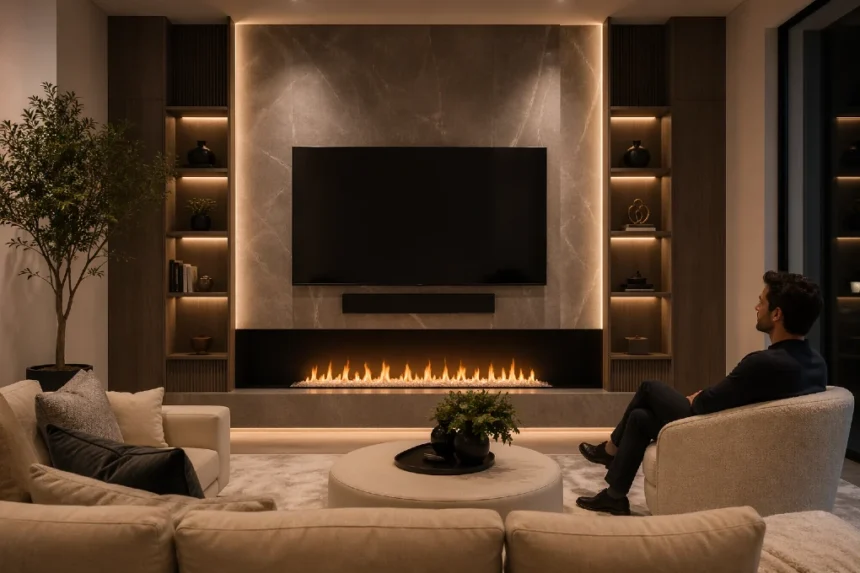
A well-designed Media Wall Fire can do something few home upgrades manage to pull off at the same time. It adds warmth, creates a focal point, hides visual clutter, and makes a room feel more finished without needing a full renovation. That is a big reason more homeowners are turning to a Media Wall setup when they want their living room, lounge, or even bedroom to feel elevated.
- Why a Media Wall Fire Feels Like a Bigger Upgrade Than a Standard Fireplace
- Media Wall Fire Features That Matter Most
- Design Features That Make a Media Wall Fire Look More Expensive
- The Safety Features You Should Never Ignore
- Which Rooms Benefit Most From a Media Wall Fire
- Common Mistakes That Can Ruin the Final Look
- Is a Media Wall Fire Worth It?
What makes this feature so appealing is that it sits at the intersection of comfort and design. A Media Wall is not just about heating a room. It is about shaping how the room feels when you walk into it. The right finish, proportions, storage layout, lighting, and flame display can make a basic wall look custom built and expensive, even when the overall design is fairly simple.
In practical terms, most modern media wall installations use an electric fire insert because it is easier to integrate into a feature wall than a traditional wood-burning fireplace. Electric resistance heating converts incoming electric energy into heat at the point of use, and the U.S. Department of Energy also notes that room-focused heating can make sense when you only need comfort in one occupied space for a short period.
That said, design should never come ahead of safety. The National Fire Protection Association recommends keeping anything that can burn at least three feet away from heating equipment, and the U.S. Consumer Product Safety Commission advises plugging electric heaters directly into a wall outlet rather than an extension cord or power strip.
So if you are wondering which details actually make a Media Wall Fire worth the investment, the answer is simple. It is the features. Not all media walls feel premium. The ones that do usually get a handful of key details exactly right.
Why a Media Wall Fire Feels Like a Bigger Upgrade Than a Standard Fireplace
A standard fireplace can look attractive on its own, but a Media Wall Fire changes the whole wall instead of just one element. It brings together the fire, television, shelving, storage, lighting, and finishes into one coordinated surface. That makes the room feel intentional rather than pieced together.
This is especially powerful in open-plan spaces, where one wall often needs to do several jobs. It may need to support entertainment, add character, store devices, and soften a plain boxy room. A Media Wall Fire does all of that at once.
There is also the visual benefit of balance. Instead of placing a TV on one side of the room and a heater or console on another, the media wall gathers everything into a single clean composition. That reduces clutter and gives the eye one strong focal point.
For many homeowners, this is the real upgrade. The fire itself matters, but the overall built-in look is what creates the luxury effect.
Media Wall Fire Features That Matter Most
Not every feature has the same impact. Some improve performance, while others shape the look and feel of the room. The best results usually come from combining both.
1. Realistic flame effects
The first thing most people notice in a Media Wall Fire is the flame display. If the flames look flat or artificial, the whole installation can feel underwhelming. If they have depth, movement, and a convincing glow, the wall instantly feels more premium.
Look for flame systems that offer:
- Adjustable flame brightness
- Multiple flame color settings
- Ember bed lighting
- Different fuel bed styles such as logs, crystals, or pebbles
- Flame-only mode for year-round ambience
Flame-only mode is especially useful because it lets you enjoy the visual effect even when you do not need extra heat. That means the Media Wall Fire becomes a design feature in every season, not just winter.
2. A slim built-in profile
One of the biggest differences between a dated setup and a modern one is depth. A bulky insert can make the wall feel heavy. A slimmer fire makes the installation feel sleeker and more architectural.
A low-profile unit tends to work better in smaller rooms, narrow lounges, or homes where you want the wall to feel elegant rather than dominant. In design terms, less projection usually means a cleaner silhouette.
This is why many current interiors lean toward linear fires rather than traditional square fireboxes. The long horizontal shape feels contemporary and works well beneath a wall-mounted screen.
3. Proportional sizing
This is one of the most overlooked Media Wall Fire features, yet it affects the final result more than people expect. A fire that is too small can look lost. A fire that is too large can overwhelm the wall and make the TV look secondary.
Good proportion depends on the width of the wall, ceiling height, room size, and the scale of nearby furniture. In a compact space, a modestly sized fire often looks more refined than a dramatic oversized unit. In a larger room, going too small can make the whole design feel hesitant.
A helpful rule in practice is to think about visual balance before product size. The best Media Wall Fire is not necessarily the largest one. It is the one that looks like it belongs there.
4. Hidden cable management
Nothing ruins a polished media wall faster than visible wires. One of the smartest features in a strong Media Wall Fire installation is not decorative at all. It is invisible infrastructure.
Hidden cable routing keeps power leads, HDMI cables, internet connections, and sound system wiring out of sight. That makes the wall look intentional and keeps the eye on the fire and the surrounding finishes.
It also helps with day-to-day usability. When devices are easier to access and cables are managed properly, upgrades and maintenance become less frustrating later.
5. Integrated storage that does not feel bulky
A Media Wall Fire often works best when it includes storage, but the trick is to make storage disappear into the overall design. Heavy cabinets can make the wall feel blocky. Open shelves packed with random items can create visual noise.
The most effective storage tends to be:
- Low-profile base units
- Push-to-open cabinets
- Recessed niches
- Floating shelves with limited décor
- Concealed compartments for routers, consoles, and remotes
This balance matters because media walls are meant to look clean. Storage should support that goal, not fight against it.
6. Layered lighting
Lighting is often the feature that takes a Media Wall Fire from nice to memorable. Soft LED strips, shelf lighting, or subtle backlighting around the unit can add depth after dark and make the wall feel more atmospheric.
The key is restraint. Good lighting supports the fire rather than competing with it. Warm, indirect light usually works best because it complements the flame effect and makes the room feel calm.
This is especially useful in evening spaces where the television is not always the main attraction. Sometimes you just want the room to feel relaxed, and lighting does a lot of that work.
7. Heat settings with practical control
A great-looking Media Wall Fire still needs to function well. Adjustable heat output, thermostat control, timers, and remote or app-based settings all improve everyday use.
The U.S. Department of Energy notes that heating a room you are actively using can be more efficient than heating the whole house for a short period, though actual cost depends on local electricity prices and the wider heating system in the home.
That matters because homeowners increasingly want comfort that feels flexible. A fire that lets you adjust heat based on the room, the season, and the time of day simply works better in real life.
Design Features That Make a Media Wall Fire Look More Expensive
A high-end look does not always come from buying the most expensive insert. It often comes from the surrounding design decisions.
Material contrast
One reason a Media Wall Fire can transform a room is its ability to combine textures. A smooth painted finish with wood slats, stone-effect panels, microcement, or fluted detailing can create subtle contrast without overwhelming the space.
The most successful combinations usually feel restrained. Too many materials can make the wall busy. Two or three well-chosen finishes often create a more luxurious result.
Clean framing around the fire
The area around the fire should feel deliberate. Tight lines, neat edges, and well-proportioned trim help the installation look custom made. If the opening looks awkward or the gap around the unit feels inconsistent, the finish can start to feel cheap.
This is where craftsmanship really shows. Even a beautiful Media Wall Fire can lose impact if the surrounding build is careless.
Symmetry or intentional asymmetry
Both approaches can work, but they need confidence. A centered Media Wall Fire with matching shelving on both sides creates order and formality. An off-center layout with one bank of shelves can feel more modern and relaxed.
The key is choosing one logic and sticking to it. Problems usually happen when a wall looks half-symmetrical and half-random. Strong composition makes the difference.
Shelf styling that leaves breathing room
Open shelving is popular around a Media Wall Fire, but it only works when there is space around the objects. Too many picture frames, ornaments, and accessories can make the wall feel crowded.
A better approach is to use fewer items with stronger shapes. Think ceramics, books, small plants, or one sculptural piece rather than ten unrelated objects. The wall should still feel calm when you step back and look at the whole room.
The Safety Features You Should Never Ignore
Style gets attention, but safety is where smart planning matters most. Heating equipment requires clearance from combustible materials, and NFPA safety guidance recommends keeping anything that can burn at least three feet away.
If your Media Wall Fire includes an electric heating element, proper electrical setup matters as much as the visual design. CPSC guidance warns against using extension cords or power strips with electric portable heaters and stresses the importance of smoke and carbon monoxide alarms in the home.
Here are the safety priorities worth taking seriously:
| Feature | Why It Matters |
|---|---|
| Proper clearance | Reduces fire risk near combustible finishes and décor |
| Qualified installation | Helps ensure the wall, electrical supply, and appliance setup are appropriate |
| Ventilation planning | Important for product performance and surrounding heat management |
| Direct wall outlet connection | Safer than extension cords or overloaded power strips for heater-type appliances |
| Alarm protection | Smoke and CO alarms add a critical layer of household safety |
A Media Wall Fire should feel reassuring, not risky. A beautiful wall is only an upgrade if it is planned responsibly.
Which Rooms Benefit Most From a Media Wall Fire
Living rooms are the obvious choice, but they are not the only option.
A Media Wall Fire works especially well in:
- Main family rooms where TV viewing and relaxation happen together
- Open-plan kitchen living areas that need one strong focal point
- Bedrooms where a softer luxury feel is the goal
- Snug rooms or dens where a compact feature wall adds character
- New-build homes that need architectural interest without structural remodeling
In smaller homes, this feature can make the room feel more custom built. In larger homes, it can make expansive walls feel warmer and less empty.
That flexibility is part of the appeal. A Media Wall Fire is not tied to one décor style either. It can work in minimalist interiors, contemporary homes, transitional spaces, and even more classic rooms when the materials are chosen carefully.
Common Mistakes That Can Ruin the Final Look
Some media walls fail not because the idea is wrong, but because the execution is rushed. If you want the feature to look finished and timeless, avoid these common mistakes.
Choosing the fire last
The fire should influence the design from the start. Its size, trim, depth, output, and installation requirements affect the whole wall. Designing first and shopping later often leads to awkward compromises.
Overloading the wall
A Media Wall Fire already makes a strong statement. When you add heavy shelves, multiple textures, bright LEDs, oversized décor, and too many gadgets, the wall starts to feel noisy.
Ignoring viewing height
The TV and fire need to work together visually, but comfort matters too. If the screen sits too high because the fire opening was placed without planning, the room may look good but feel tiring to use.
Treating it as décor only
A Media Wall Fire needs to function in everyday life. Storage access, cable routes, cleaning, and maintenance all matter after the first week of admiration has passed.
Is a Media Wall Fire Worth It?
For many homeowners, yes. A Media Wall Fire can improve the room visually, create a stronger focal point, and offer useful supplemental warmth in the right setting. It can also make a standard living room feel more tailored and more current.
The real value comes when the feature is designed around the room rather than dropped into it as a trend. A well-proportioned wall with realistic flames, subtle lighting, concealed storage, and thoughtful finishing tends to age much better than one built purely for social media impact.
That is why the best projects focus less on trying to impress and more on making the room feel cohesive. When that happens, the Media Wall Fire stops feeling like a separate product and starts feeling like part of the architecture.
In the end, the features that truly upgrade your interior are the ones that improve both form and function. Realistic flame effects, clean proportions, integrated storage, hidden wiring, practical controls, and calm lighting all work together to create that effect. If those details are handled well, a Media Wall Fire can turn an ordinary wall into the most inviting part of the home.
And if you want a little extra context on how the idea of the electric fireplace fits into the broader history of fireplace design, it is interesting to see how modern versions have evolved from purely functional heating features into central design statements.
A beautifully planned Media Wall Fire does not just fill space. It changes the mood of the room, sharpens the layout, and gives everyday living a more finished backdrop. That is what makes it more than a trend and why it continues to appeal to homeowners who want style, comfort, and usability in one feature.