

Pregnancy changes your body in ways that can feel surprising from one week to the next. One day your shoes fit fine, and the next day your ankles feel heavy, your calves look puffier than usual, and standing for too long suddenly becomes exhausting. That is exactly why compression hose for pregnancy have become such a practical tool for many expecting moms. They are not a miracle fix, but they can offer real day to day relief when swelling, leg fatigue, or visible veins start making pregnancy more uncomfortable than it needs to be.
- Why leg swelling happens during pregnancy
- What compression hose for pregnancy actually do
- The biggest benefits of compression hose for pregnancy
- Who is most likely to benefit
- When to start wearing compression hose for pregnancy
- How to choose the right compression hose for pregnancy
- How to wear them comfortably every day
- Common mistakes to avoid
- Are compression hose for pregnancy safe?
- Real life situations where they help most
- Frequently asked questions
- Final thoughts on daily support and comfort
For many women, compression hose for pregnancy are less about fashion and more about function. They are designed to apply gentle pressure to the legs, helping blood move back up toward the heart instead of pooling in the lower legs and feet. Medical sources such as Mayo Clinic, Cleveland Clinic, ACOG, and the NHS all note that compression garments or stockings can help with swelling, circulation support, discomfort, and clot prevention in certain situations, especially during pregnancy and travel.
If you have been wondering whether compression hose for pregnancy are actually worth it, the short answer is yes for many pregnant women, especially those dealing with swelling, long work hours, travel, or early signs of varicose veins. The bigger question is how to choose the right pair, when to wear them, and how to use them comfortably. That is where a little guidance makes all the difference.
Why leg swelling happens during pregnancy
Swelling during pregnancy is common, especially in the feet, ankles, and lower legs. Your body holds more fluid while you are pregnant, and as your uterus grows, it puts more pressure on the veins in your pelvis and legs. That can slow the return of blood from the lower body, which makes fluid buildup more likely. Mayo Clinic lists pregnancy related swelling as a common issue and suggests compression stockings as one helpful way to manage it.
This is also why your legs may feel heavier at the end of the day than they do in the morning. If you spend hours sitting, standing, commuting, or moving around at work, that heavy, tight feeling can become more noticeable. Compression hose for pregnancy can help by giving your lower legs structured support when your circulation feels sluggish.
It is worth saying that mild swelling is common, but sudden or severe swelling can be different. ACOG and Mayo Clinic both advise pregnant women to speak with their clinician if swelling is dramatic, one sided, or comes with warning signs like pain, redness, chest discomfort, severe headache, or changes in vision.
What compression hose for pregnancy actually do
At the most basic level, compression hose for pregnancy work by applying graduated pressure to the legs. That pressure is usually strongest near the ankle and gradually lessens as it moves up the leg. The goal is to support venous return, reduce pooling, and ease the strain that often leads to swelling and achiness. Cleveland Clinic explains that compression therapy improves blood flow and can reduce pain and swelling associated with poor circulation.
This does not mean every pair is medical grade or that every pregnant woman needs the strongest option available. In many cases, mild to moderate support is enough for everyday comfort. For women with more significant varicose veins, persistent swelling, a clotting risk, or a provider recommendation, prescription strength stockings may be more appropriate. ACOG notes that compression stockings may be recommended during long distance travel to reduce the risk of blood clots, and the NHS also refers to prescribed compression stockings in pregnancy related DVT care.
The reason they feel helpful is simple. When your legs are tired, puffy, and uncomfortable, extra support can make walking, standing, and even sitting feel more manageable. That is why many women describe compression hose for pregnancy as one of those small changes that make daily life noticeably easier.
The biggest benefits of compression hose for pregnancy
One of the most obvious benefits is reduced swelling. If your socks leave deep marks or your shoes feel tighter by late afternoon, you are exactly the kind of person who may notice the difference. Mayo Clinic specifically includes compression stockings among the ways to manage ankle swelling during pregnancy.
Another benefit is better leg comfort. Pregnancy can make your legs feel restless, sore, warm, or unusually tired. Compression support can reduce that dragging sensation many women feel after errands, work, or long periods on their feet. Cleveland Clinic notes that compression socks can improve circulation, reduce swelling, and help with pain and discomfort.
There is also the issue of varicose veins. Pregnancy can increase pressure inside the veins, especially in the legs, and that can make veins appear more prominent. The NHS notes that varicose veins are common in pregnancy and says compression stockings may help with symptoms, even though they do not prevent all vein changes from happening.
Travel is another situation where compression hose for pregnancy become especially useful. Sitting for long stretches in a car or on a plane can slow circulation even more. ACOG advises that for long distance travel, an ob gyn may recommend compression stockings to lower clot risk.
Then there is the everyday convenience factor. Compression hose for pregnancy can make a normal day feel less draining. If you teach, nurse, work retail, commute, or spend a lot of time managing a home, leg support can add up to more comfort by the evening.
Who is most likely to benefit
Not every pregnant woman feels the need to wear compression hose for pregnancy, but some groups tend to benefit more than others.
Women with swelling in the second or third trimester often find them useful, especially when puffiness gets worse as the day goes on. Women who stand for long hours may also notice a clear improvement in comfort. Mayo Clinic’s pregnancy advice for work and swelling both mention compression or support stockings as helpful options in these situations.
They may also be helpful if you have a family history of varicose veins, have already developed visible veins, or have had leg discomfort in a previous pregnancy. If your provider has talked to you about clot risk, travel precautions, or circulation support, compression hose for pregnancy may be part of that plan as well.
Even women who do not have major swelling sometimes wear them for comfort during travel, desk work, or long work shifts. In other words, you do not need a dramatic medical issue to benefit from structured support.
When to start wearing compression hose for pregnancy
There is no single week when every pregnant woman should start. Some women begin wearing compression hose for pregnancy as soon as swelling or heaviness starts. Others wait until travel, work demands, or visible veins make them feel necessary.
A practical approach is to start when your body gives you a reason. If your legs feel fine most days, you may only wear them occasionally. If your ankles swell almost every afternoon, wearing them earlier in the day may work better than waiting until discomfort is already noticeable.
That early timing matters. Compression garments often work best when you put them on before swelling builds. Mayo Clinic’s advice on fitting compression stockings notes that legs are often best measured in the morning, when swelling is at its lowest.
How to choose the right compression hose for pregnancy
This is where many women get overwhelmed, because shopping for compression wear can feel surprisingly technical. The good news is that you do not need to overcomplicate it.
Start with the compression level. Mild support is often available over the counter and may be enough for everyday pregnancy swelling. Stronger compression levels are usually best chosen with medical advice, especially if you have significant vein issues, one sided swelling, past clotting problems, or a provider’s prescription. Cleveland Clinic notes that mild compression can be bought over the counter, while higher levels may require a prescription.
Next, think about height. Knee high styles are often enough for routine swelling and general support. If symptoms extend above the knee or if a clinician recommends fuller coverage, thigh high or maternity tights may make more sense. Some clinical guidance also notes that the garment should cover the area affected by varicosities or swelling.
Material matters more than people expect. Pregnancy is already uncomfortable enough without itchy, hot fabric. Look for breathable, stretch friendly material that feels wearable for hours. The best compression hose for pregnancy are the ones you will actually keep using, not the ones that look impressive in a product description.
Fit is just as important as compression level. Too loose and they do not help much. Too tight and they become annoying, difficult to put on, or uncomfortable around the calf and knee. If you are between sizes or dealing with significant swelling, getting measured can be worth it. Mayo Clinic highlights proper fitting as an important part of successful use.
How to wear them comfortably every day
A lot of people buy compression hose for pregnancy, wear them once, struggle to get them on, and decide they are not for them. Usually the issue is technique, not the idea itself.
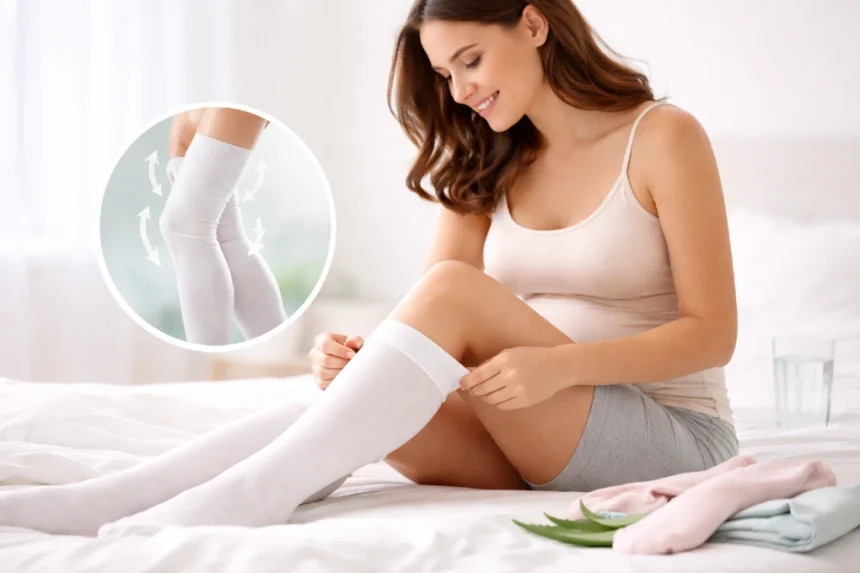
The easiest time to put them on is in the morning, before your legs have had time to swell. Smooth them on gradually instead of tugging from the top. Make sure the fabric lies flat without bunching. Wrinkles can create pressure points, and that defeats the purpose.
You also want to pair them with sensible daily habits. Compression works best as part of a bigger comfort routine. Mayo Clinic and the NHS both mention strategies like elevating the legs, staying active, avoiding long periods of standing still, and not sitting with legs crossed for too long.
Here are a few habits that make a real difference:
- Put them on early in the day, not after swelling peaks
- Take short walking breaks if you sit for long periods
- Elevate your legs when you can
- Stay hydrated, especially during travel
- Wear comfortable shoes with good support
- Ask your provider before choosing high compression levels
These are simple steps, but together they make compression hose for pregnancy much more effective and much easier to live with.
Common mistakes to avoid
One common mistake is buying the cheapest pair without checking size, pressure, or material. What looks like a bargain can end up stuffed in a drawer after one uncomfortable afternoon.
Another mistake is assuming tighter always means better. Stronger compression is not automatically more effective for routine pregnancy discomfort. In some cases, it is simply less comfortable and harder to use consistently. Cleveland Clinic advises speaking with a provider about what level is right for your situation.
Some women also wait until their feet are already swollen and then try to put the stockings on. That is much harder than starting in the morning. Others wear them inconsistently and then conclude they do not help. Like many supportive tools, compression hose for pregnancy tend to work better when they are used proactively rather than reactively.
It is also a mistake to ignore warning signs. Compression wear can support comfort, but it should not be used to brush off symptoms that need medical attention. New one sided swelling, redness, tenderness, shortness of breath, or sudden severe swelling should never be self managed without speaking to a clinician. ACOG and the NHS both stress the importance of evaluating possible clot symptoms promptly.
Are compression hose for pregnancy safe?
For most pregnant women, compression hose for pregnancy are generally considered safe when used correctly and when the fit and compression level are appropriate. Major medical sources openly recommend or support compression stockings in pregnancy related situations like swelling, varicose vein symptoms, travel, and circulation support.
That said, safe does not mean one size fits everyone. If you have diabetes with circulation concerns, skin ulcers, arterial disease, severe leg pain, numbness, or unusual swelling patterns, it is smart to check with a clinician before using them. Compression therapy is helpful, but it still needs to fit the person.
Most women do best with gentle to moderate support unless their provider says otherwise. If a pair causes pain, digging, tingling, or skin irritation, the problem may be the fit, the compression level, or the material.
Real life situations where they help most
There is a reason so many women discover compression hose for pregnancy right before a flight, a long shift, or a busy trimester. Those are the moments when circulation issues become impossible to ignore.
If you are traveling, they can help reduce that stiff, swollen feeling that comes from sitting too long. ACOG’s travel advice specifically points to compression stockings as part of clot prevention planning during long distance trips.
If you work on your feet, they can make the end of the day feel much less punishing. If you work at a desk, they can still help because sitting for hours is not much better for circulation than standing still.
If you are late in pregnancy and your rings, shoes, and socks all feel tighter than usual, this kind of support may be one of the easiest comfort upgrades you can make without changing your whole routine.
Frequently asked questions
Do compression hose for pregnancy prevent swelling completely?
No, not usually. They are more realistic as a way to reduce swelling and discomfort rather than erase it completely. The NHS notes that compression stockings can ease symptoms, and Mayo Clinic includes them as part of swelling relief, not as a guaranteed cure.
Can I wear compression hose for pregnancy every day?
Many women do, especially during work, errands, or travel. Daily use is common when the fit is right and the compression level is appropriate. If you are unsure, check with your provider.
Are compression socks and compression hose the same thing?
They are related, but the terms are often used a little differently in shopping and casual conversation. Compression socks are often shorter and more casual, while hose or stockings may refer to knee high, thigh high, or full maternity styles. The purpose is similar, which is graduated pressure to support blood flow.
Should I sleep in them?
Not always. Whether to sleep in compression garments depends on the type, your symptoms, and your clinician’s advice. Cleveland Clinic notes that this is not something to assume automatically.
Will they help with varicose veins?
They may help relieve symptoms and discomfort associated with varicose veins during pregnancy, but they do not always stop veins from appearing. The NHS makes this distinction clearly.
Final thoughts on daily support and comfort
Pregnancy asks a lot from your body, and your legs often carry more of that burden than people realize. Swelling, heaviness, tired calves, and visible veins can all make normal days feel longer and less comfortable. That is why compression hose for pregnancy are such a useful option. They are simple, practical, and often surprisingly effective when used the right way.
The best thing about compression hose for pregnancy is that they fit into ordinary life. You can wear them to work, on errands, during travel, or on the days when your legs simply need more support than usual. They are not a substitute for medical care, but they can absolutely make pregnancy more manageable. If your symptoms are mild to moderate, they may be one of the easiest ways to add comfort without adding complexity.
And if you are trying to understand the bigger picture of circulation, swelling, and vein support, reading a little about the body’s blood circulation can make the purpose behind compression hose for pregnancy even easier to understand.
In the end, comfort matters. Feeling supported matters. And for many moms to be, compression hose for pregnancy are a small change that makes a very noticeable difference in how the day feels from morning to night.