


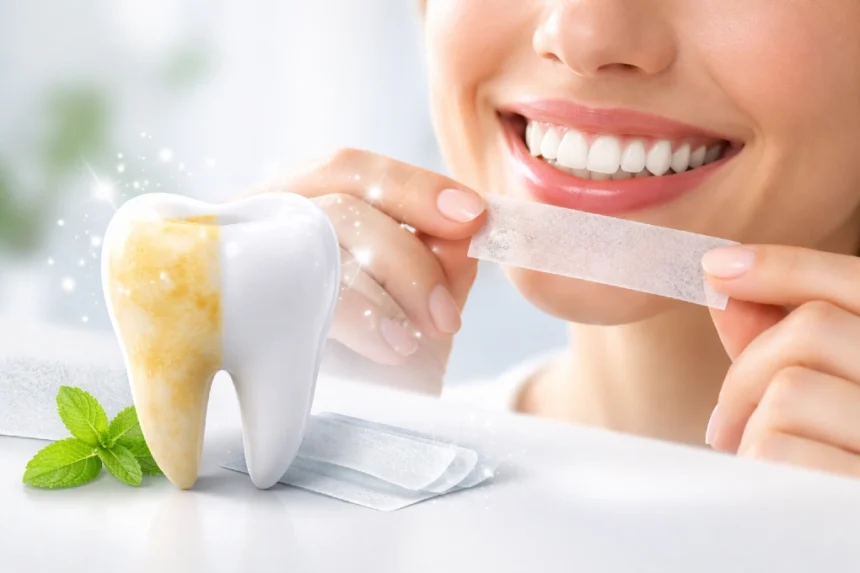
If you have ever looked in the mirror and wondered, do whitening strips work on yellow teeth, the honest answer is yes, they often do. But they do not work the same way for everyone, and they do not fix every kind of stain. For many people, whitening strips can noticeably brighten teeth that look yellow from coffee, tea, red wine, smoking, or everyday surface buildup. They tend to work best on common external stains, while deeper discoloration is usually slower to change and sometimes needs professional treatment instead.
- What whitening strips actually do
- Do Whitening Strips Work on Yellow Teeth From Coffee, Tea, and Smoking?
- When whitening strips do not work as well
- How long it takes to see results
- Are whitening strips safe for enamel?
- Why teeth can feel sensitive afterward
- Who should be careful before using them
- How to get better results without overdoing it
- Whitening strips versus whitening toothpaste and dentist treatments
- The honest bottom line on yellow teeth stains
- Conclusion
That is why this topic gets so much attention. People want a simple at home option that is affordable, easy to use, and actually worth the time. In many cases, strips deliver visible improvement within days to two weeks because they hold a peroxide-based gel against the tooth surface long enough to break down stain compounds. At the same time, results depend on the cause of the yellowing, the product formula, how consistently you use it, and whether your teeth are naturally more prone to sensitivity.
So, do whitening strips work for removing yellow teeth stains? Usually, yes, especially when the yellow look comes from surface staining rather than deep internal discoloration. The bigger question is how well they work, how fast they work, and whether they are the right choice for your teeth.
What whitening strips actually do
Whitening strips are thin flexible pieces coated with a whitening gel, usually made with hydrogen peroxide or carbamide peroxide. These ingredients do more than scrub the outside of your teeth. They chemically break down pigmented molecules that make teeth look darker or more yellow, which is why strips can do more than ordinary whitening toothpaste.
This matters because many people assume yellow teeth are always dirty teeth. That is not really how it works. Teeth can look yellow for several reasons. Some stains sit on the outer surface, called extrinsic stains. Others are deeper inside the tooth structure, called intrinsic discoloration. Whitening strips are generally better at improving the first type and can help with some mild internal discoloration, but they are not a magic fix for every case.
In simple terms, if your teeth became more yellow over time from drinks, smoking, or aging, strips may help quite a bit. If the discoloration comes from trauma, certain medications, large fillings, crowns, or enamel wear that exposes more yellow dentin underneath, the outcome is usually more limited.
Do Whitening Strips Work on Yellow Teeth From Coffee, Tea, and Smoking?
This is where Do Whitening Strips Work often has the clearest answer. Stains from coffee, tea, cola, red wine, and tobacco are among the most common reasons people notice yellow teeth. Because these stains are often surface-based or partly surface-based, peroxide whitening strips can usually lift them more effectively than basic whitening toothpaste alone.
That does not mean every smoker or coffee drinker gets the same result. Heavier staining usually takes longer and may need more than one treatment cycle. It is also common for the front teeth to improve faster than teeth farther back, simply because strips fit the visible front surfaces best.
A good real-world example is someone who drinks two or three cups of coffee every day and has noticed a gradual yellow tint over the last couple of years. In that case, the answer to Do Whitening Strips Work is often yes, and the change can be visible enough that friends or family notice it. But if that same person keeps drinking dark beverages during treatment and does not rinse or brush afterward, results may be slower and less even.
When whitening strips do not work as well
This is the part marketers tend to skip. Do whitening strips work on every kind of yellow stain? No.
They do not change the color of crowns, veneers, bonding, or fillings. So if you have dental work on front teeth, your natural teeth may lighten while the restorations stay the same shade. That can leave a color mismatch. The ADA also notes that whitening chemicals may interact differently with restorations and other dental materials, which is one reason dentists often recommend checking before treatment.
They also work less predictably on deep intrinsic discoloration. Tetracycline staining, trauma-related darkening, fluorosis, or age-related yellowing caused by thinning enamel can be harder to improve with over the counter strips alone. Some change may still happen, but expectations need to stay realistic.
Another issue is fit. Whitening strips only work where they touch. If your teeth are crowded, rotated, or unevenly shaped, some spots may whiten more than others. So even when do whitening strips work is a yes, the finish may not be perfectly uniform.
How long it takes to see results
One reason people like strips is speed. They are not instant, but they are not painfully slow either. Cleveland Clinic says visible lightening may happen within days, and whitening strips typically lighten teeth within about two weeks when used as directed. Older clinical trials on hydrogen peroxide strips also found meaningful whitening after one to two weeks of use.
That timeline is important because people often quit too early. After two or three uses, they start asking, do whitening strips work, or is this just advertising? In many cases, the answer shows up with consistent use rather than after the first application. Some formulas are designed for faster action, while gentler versions can take longer.
You also have to remember that whiter does not always mean bright white. A noticeable improvement of a few shades can look very natural and attractive. Professional whitening may go further, but many people are perfectly happy with the more modest brightening strips provide.
Are whitening strips safe for enamel?
This is one of the biggest concerns, and understandably so. Current research and guidance generally support that tooth whitening is safe and effective when products are used as directed. That does not mean zero side effects. It means the main issues are usually temporary tooth sensitivity and gum irritation rather than major damage when people follow instructions.
The trouble starts when people overdo it. The ADA has warned that frequent or aggressive whitening can damage enamel and gums, increase sensitivity, and even make teeth look translucent over time. That is not the usual result of proper use. It is more associated with misuse, repeated back to back treatments, or chasing unnaturally white teeth.
So, do whitening strips work safely? Usually yes, when you choose a reputable product, read the label, and do not treat them like something you can keep using endlessly.
Why teeth can feel sensitive afterward
Sensitivity is the most common downside. If you have ever felt a sudden zing from cold water after whitening, you are not imagining it. Whitening agents can temporarily make teeth more reactive. ADA and Cleveland Clinic both note that temporary sensitivity and gum irritation are common side effects, especially with stronger peroxide formulas.
The reason is pretty simple. Peroxide passes through the outer layers of the tooth to break apart stain molecules. During that process, the tooth can become more sensitive for a short time. In most cases, this settles down after treatment stops or after you space applications farther apart. Clinical evidence on over the counter whitening products has found satisfactory short term bleaching effects, with little to no impact on dentin hypersensitivity overall, though sensitivity still varies by person and product.
If your teeth are already sensitive, it does not automatically mean strips are off limits. It means you should be more selective. Lower-strength products, shorter wear times, fewer consecutive days, and sensitivity toothpaste can make a big difference.
Who should be careful before using them
There are some situations where it is smart to pause before trying strips. If you have untreated cavities, cracked teeth, gum disease, exposed roots, mouth sores, or severe sensitivity, whitening first is usually not the best move. Cleveland Clinic advises talking to a dentist before buying over the counter whitening products because some products can damage enamel or worsen problems if your mouth is not healthy to begin with.
The same goes if you have a lot of visible dental work in the front of your mouth. Since whitening strips do not lighten crowns or fillings, you could end up with uneven color.
For teenagers, pregnant patients, or anyone with a more complex dental history, a dentist’s advice is especially worthwhile. Not because strips are automatically dangerous, but because the reason behind the yellowing may matter more than the product itself.
How to get better results without overdoing it
If your main question is do whitening strips work, the smartest approach is not just buying the strongest box on the shelf. It is using the right product correctly.
A few practical habits improve the odds of getting a good result:
- Brush gently before use, but do not scrub aggressively.
- Dry teeth lightly before applying the strips so they stick better.
- Follow the exact wear time instead of leaving strips on longer.
- Avoid coffee, tea, cola, red wine, and cigarettes during the treatment window when possible.
- Rinse after consuming stain-causing drinks.
- Use a sensitivity toothpaste if your teeth react during treatment.
- Stop and reassess if your gums look irritated or your teeth start aching.
These steps sound basic, but they matter. Most disappointing results happen because the strips were used inconsistently, worn incorrectly, or expected to fix stains that need professional care.
Whitening strips versus whitening toothpaste and dentist treatments
People often compare all whitening methods as if they do the same thing. They do not.
Whitening toothpaste mainly helps with surface stains and usually gives milder results. Mayo Clinic notes that whitening toothpaste can make teeth appear whiter over time, but the effect is usually not dramatic and it cannot change the natural color of teeth or lighten deeper stains well.
Whitening strips are a step up because they keep bleaching agents in contact with the teeth longer. That makes them more effective than toothpaste for many yellow stain cases.
Professional whitening, whether in office or dentist-supervised trays, can produce stronger or faster results, especially for stubborn discoloration. It is also more expensive. For someone with mild to moderate yellowing, strips are often the middle ground that makes the most sense: better than toothpaste, cheaper than in-office treatment, and easier to use at home.
So if you are still asking, do whitening strips work, the practical answer is this: they work well enough for many people to see a clear improvement, but they are not the strongest option available.
The honest bottom line on yellow teeth stains
For the average person dealing with yellow teeth from daily life, do whitening strips work? Yes, very often they do. They are especially useful for mild to moderate yellowing caused by foods, drinks, smoking, and normal stain buildup over time. They are less reliable for deep discoloration, restorations, or situations where the yellow color comes from the inside structure of the tooth rather than the surface.
They are also not something to treat casually. The best results come from realistic expectations, careful use, and knowing when to stop trying at home and see a dentist instead. If your stains are new and surface-level, strips can be a convenient fix. If your teeth are unevenly colored, highly sensitive, or heavily restored, a professional opinion can save you time and frustration.
A whiter smile can absolutely be achievable at home, but it helps to understand the science instead of chasing hype. In other words, do whitening strips work? Yes. Just not in a one-size-fits-all way. And if you want a better sense of how staining and bleaching fit into broader dental care, even basic background on tooth whitening can help put the process into context.
Conclusion
So, do whitening strips work for removing yellow teeth stains? In most everyday cases, yes. They can noticeably brighten teeth by lifting common yellow stains caused by coffee, tea, wine, smoking, and normal aging, especially when used exactly as directed. They are not perfect for deep intrinsic discoloration, crowns, veneers, or severe staining, but for many people they offer a realistic and affordable at home whitening option. The key is using them safely, consistently, and with the right expectations.