


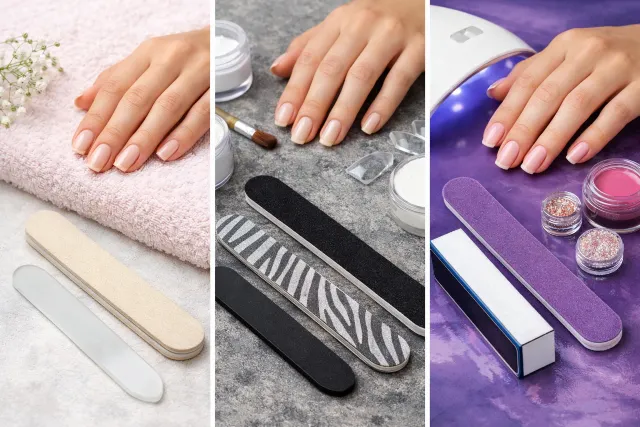
If you have ever wondered why your manicure looks smooth one day and jagged the next, the answer is often simpler than the polish you used. It usually comes down to Nail Files. The right file makes shaping easy, prevents peeling, and keeps edges from catching on hair or fabric. The wrong one can leave tiny tears that turn into splits, especially on natural nails.
- What are Nail Files and why do they matter?
- Nail file materials: what each one is best at
- Nail file grit explained in plain English
- Best Nail Files for natural nails
- Best Nail Files for acrylic nails
- Best Nail Files for gel manicures and gel enhancements
- Filing technique: how to shape without causing damage
- Hygiene and safety: the part most people skip
- How to clean Nail Files at home
- When should you replace a nail file?
- Common questions people ask about Nail Files
- A quick buying checklist for Nail Files
- Conclusion
In this guide, we are going deep on Nail Files for every situation: natural nails, acrylic enhancements, and gel manicures. You will learn what grit actually means, which materials are worth your money, how to file without weakening the nail, and how to keep things hygienic so your tools do not become the problem you are trying to fix.
To keep it practical, I will also include a grit table, real world use cases, and a few quick routines you can copy for your next at home manicure.
What are Nail Files and why do they matter?
A nail file is a shaping tool with a textured surface designed to refine the free edge of the nail. That sounds basic, but the impact is huge. A clean edge helps reduce snagging and breakage, while a rough edge invites peeling because the layers at the tip start lifting.
Two things control how a file behaves:
- Material (emery board, glass, metal, ceramic, foam buffer, electric e file bits)
- Grit (how coarse or fine the surface is)
Grit matters because lower numbers are more aggressive. Coarse files remove product fast but can shred natural nails. Finer files are slower, but they leave a smoother edge that stays neat longer.
Many beauty experts and nail techs recommend avoiding very low grit on natural nails because it can cause damage and thinning. For example, guidance aimed at consumers commonly warns that very coarse grits like 80 are too harsh for natural nails and are better suited to acrylic product removal.
Nail file materials: what each one is best at
Not all Nail files feel the same, and they are not meant to. Here is how the most common types compare.
Emery boards
These are the classic, flat files most people start with. They are affordable and easy to find in multiple grit levels. The downside is that they wear down, they can get rough unevenly, and many are not truly washable.
Best for:
- Quick shaping
- Basic maintenance on natural nails with the right grit
- Acrylic shaping if you choose lower grit options
Glass or crystal files
Glass files are loved because they can create a smooth edge that feels sealed, not frayed. They are also reusable and can be disinfected, which is a big hygiene upgrade compared to disposable boards. Consumer health guidance often recommends glass or crystal files for weak or brittle nails because they are gentler than coarse boards.
Best for:
- Natural nails, especially if yours peel or split
- Keeping edges smooth between manicures
- People who want a washable, long lasting tool
Not ideal for:
- Heavy acrylic debulking or fast product removal, since glass is typically too fine for that job
Metal files
Metal files are rigid and often very harsh on natural nails. They can create micro snags that you feel later when your nail catches on fabric. Some people like them for quick filing, but for natural nail health, they are rarely the best option.
Best for:
- Emergency use on tougher enhancements, depending on the surface
- People who prefer a rigid tool and use light pressure
Ceramic files
Ceramic files can be a nice middle ground. They are usually gentler than metal and more durable than many emery boards. Many are washable, too.
Best for:
- Natural nails if the grit is fine enough
- Smooth shaping with more durability than an emery board
Buffers and polishing blocks
These are not shaping tools, even though many people use them that way. Buffers are designed to smooth ridges and polish the surface. Overuse can thin the nail plate, so they should be used carefully, especially if your nails already feel bendy.
Best for:
- Light surface smoothing, occasionally
- Prepping enhancements when used correctly
Nail file grit explained in plain English
Grit is basically how rough the file is. Lower grit means rougher, higher grit means smoother.
Here is a practical way to think about it:
- 80 to 100 grit: very coarse, product removal and shaping acrylics
- 150 to 180 grit: medium, refining enhancements and some natural nail shaping
- 180 to 240 grit: great range for most natural nails because it shapes without shredding
- 240 and above: finishing and smoothing, especially helpful if you want a clean, sealed edge
Quick grit guide table
| Grit range | How it feels | Best use | Avoid if |
|---|---|---|---|
| 80 to 100 | very rough | debulking acrylic, removing product, shortening thick extensions | shaping natural nails |
| 150 | rough to medium | blending tips, refining acrylic structure | thin natural nails |
| 180 | medium | shaping most enhancements, some natural nails with light pressure | peeling natural nails if you press too hard |
| 240 | medium fine | shaping natural nails, smoothing edges | heavy acrylic removal |
| 400+ | fine | finishing edges, light buffing, shine steps | fast length reduction |
If you are only buying one file for natural nails, most people do well with 180 to 240, and a finer option for finishing.
Best Nail Files for natural nails
Natural nails are made of layers, and those layers can separate at the free edge if you file too aggressively or on the wrong angle. If your nails peel, feel flimsy after gels, or break at the corners, you need a file that shapes while keeping the edge smooth.
What to look for
- Grit: 180 to 240 for shaping, plus a finer finishing option if you want extra smoothness
- Material: glass or fine emery depending on your preference
- A surface that stays even so you are not creating random scratches
Best picks by scenario
- For peeling or splitting nails: a glass file, because it tends to leave a very smooth edge and it is washable. Beauty and dermatologist oriented guidance often suggests glass files as a gentler choice for brittle nails.
- For normal, healthy nails: a quality 180 to 240 emery board works well if you replace it when it wears down
- For travel and touch ups: a compact glass file in a case, because it stays clean in your bag and lasts longer
A simple natural nail routine that actually works
- File your nails when they are dry, not right after a shower.
- Choose a 180 to 240 grit file.
- Shape in small strokes, checking symmetry as you go.
- Finish with a few light strokes using a finer side, or a finishing file, to smooth the edge.
This routine is boring in the best way. It is consistent, low damage, and it keeps nails from catching.
Best Nail Files for acrylic nails
Acrylic is durable and thick, so it needs a stronger file. This is where lower grits finally make sense. Coarse files remove bulk quickly, help you correct shape, and smooth the surface for polish.
What to look for
- 80 to 100 grit for shortening and debulking
- 150 to 180 grit for refining shape and smoothing
- A file that feels sturdy and does not bend too much
Nail technician grit guides commonly describe 80 to 100 as the heavy duty zone for extensions and product removal, while warning that those grits are not appropriate for natural nails.
The real world acrylic scenario
You got a fresh acrylic set, and two weeks later the shape looks slightly bulky at the sides. You do not need to attack it with an ultra coarse file. Instead:
- Use 150 to 180 grit to refine the sidewalls and tip
- Keep pressure light and controlled
- Focus on shape, not surface removal
If you need to remove bulk quickly because the enhancement is thick, then step down to 80 to 100, but be intentional and avoid the natural nail near the cuticle.
Best Nail Files for gel manicures and gel enhancements
Gel is tricky because the word “gel” can mean two different things:
- Gel polish on natural nails
- Hard gel or builder gel used as an enhancement
For gel polish on natural nails
When you are wearing gel polish, your main filing job is usually shaping the free edge and cleaning up roughness. Your best choice is similar to natural nail care:
- 180 to 240 grit for shaping
- Glass file for smoothing and maintenance between appointments, if you like the finish
For builder gel or hard gel
If you are working with a thicker overlay or extension, you will want:
- 100 to 180 grit for refining structure
- A finishing file for smoothing
- Careful technique around the natural nail
If you are using an electric file, the “best file” becomes the correct bit and speed, and it is easy to overdo it. For most at home users, a manual file is safer unless you have been properly trained.
Filing technique: how to shape without causing damage
Buying the right file is only half the story. Technique is where most nail damage happens.
1) Keep nails dry while shaping
Wet nails are softer and more flexible, which can lead to rough edges and splitting if you file aggressively. Many nail care professionals recommend filing on dry nails for a cleaner, more controlled shape.
2) Use light pressure
If your file is correct for the job, you should not need force. Heavy pressure is what creates heat, friction, and that sanded down feeling.
3) Match the file to the job
This sounds obvious, but it prevents most problems:
- Natural nails: 180 to 240
- Enhancements: 80 to 180 depending on the step
4) Choose your motion carefully
People argue about one direction versus a gentle back and forth. What matters most is avoiding aggressive sawing, keeping pressure light, and finishing the edge so it is smooth. If you notice fraying at the tip, your grit is likely too coarse or your pressure is too heavy.
5) Shape with your lifestyle in mind
If your nails break at the corners, square tips may be your enemy. A slightly rounded square, often called squoval, reduces corner stress.
Hygiene and safety: the part most people skip
Nail tools are personal care items, but they can still carry microbes, especially if they are shared or used in a salon setting. Public health resources note that nail salon workers can be exposed to biological hazards, including bacteria and fungi, particularly when equipment is not properly cleaned and when skin is nicked.
This matters at home too. If you toss a used file into a drawer and reuse it forever, it can become a little dust collector.
Why it matters more than you think
Fungal nail infections are common in the general population. The CDC estimates onychomycosis affects around 14 percent of people, with higher rates in older adults and people with diabetes. This does not mean a nail file causes fungal infections by itself, but it does mean hygiene is worth taking seriously, especially if you have had issues before.
Simple hygiene rules you can actually follow
- Do not share nail files, even with family
- If you do your nails after a gym shower or public pool day, wash hands and nails first
- Replace disposable emery boards regularly
- Clean reusable files properly
NIOSH evaluations of nail salons focus heavily on exposure control and safe practices, reinforcing how much the industry relies on good hygiene and ventilation.
How to clean Nail Files at home
Different files need different cleaning.
Glass files
- Wash with soap and warm water
- Use a soft brush to remove dust
- Disinfect using an appropriate method for personal tools, following product guidance
Because glass files are non porous, they are generally easier to disinfect than paper based emery boards. Consumer guidance often highlights disinfecting as one of the hygiene advantages of glass files.
Ceramic and metal files
- Wash with soap and water
- Dry completely to prevent corrosion or residue
- Disinfect if needed for personal hygiene
Emery boards
Most are not designed to be truly disinfected. If you have used it on enhancements, if it looks worn, or if you have had any nail infection concerns, it is smarter to replace it.
When should you replace a nail file?
A file that has lost its grit does not just get “less effective”. It can actually create uneven friction that leaves roughness behind.
Replace or retire a file when:
- The surface feels smooth in some places and rough in others
- It takes much longer than usual to shape
- You see fraying, peeling, or a dusty edge after filing
- You used it during an illness or after a nail infection concern
Think of it like a toothbrush. It is not glamorous, but it is part of basic upkeep.
Common questions people ask about Nail Files
Which Nail Files are best for weak, peeling nails?
A gentler option like a glass file or a fine grit file, paired with light pressure, tends to work well for peeling nails because it helps create a smoother edge. Dermatologist oriented nail care advice often points toward glass or crystal files for brittle nails.
What grit should I use on natural nails?
Many nail care guides recommend 180 to 240 grit for natural nails because it shapes while minimizing damage compared with very coarse grits.
Can I use the same file for acrylics and natural nails?
You can, but it is not ideal. Acrylic work often needs low grit that is too harsh for natural nails. Using one file for both also increases the chance you will overfile your natural nail or contaminate your tool with product dust.
Are nail salon infections common?
Most salon visits are fine, but risk exists when tools are not properly cleaned or skin is cut. OSHA specifically lists biological hazards like bacteria and fungi as concerns in nail salons when exposure occurs through contact with infected skin or unclean equipment. And fungal nail infections are common in the general population, which is why hygiene habits matter.
A quick buying checklist for Nail Files
Before you add anything to your cart, keep this simple checklist in mind:
- Choose your main nail type: natural, acrylic, or gel
- Pick the right grit range:
- Natural: 180 to 240
- Enhancements: 80 to 180 depending on the task
- Decide if you want washable and reusable (glass or ceramic) or disposable (emery)
- If you want one tool that feels premium and lasts, a glass file is often the easiest upgrade
Conclusion
Great nails are not only about polish and cuticle oil. They are about maintenance, and maintenance starts with the edge. The right Nail Files keep natural nails from peeling, help acrylics stay crisp between fills, and make gel manicures look tidy for longer.
If you want the simplest approach: use a fine grit file for natural nails, step down to lower grit only when working on enhancements, and keep your tools clean. That small routine protects the layers of your nail and saves you from the constant cycle of snag, break, trim, repeat.
One last detail that often gets overlooked: nails are built from keratin protein, and filing is basically how you shape that material at the edge. When you treat the edge gently, you keep the layers aligned, and your nails reward you by staying smoother and stronger.