


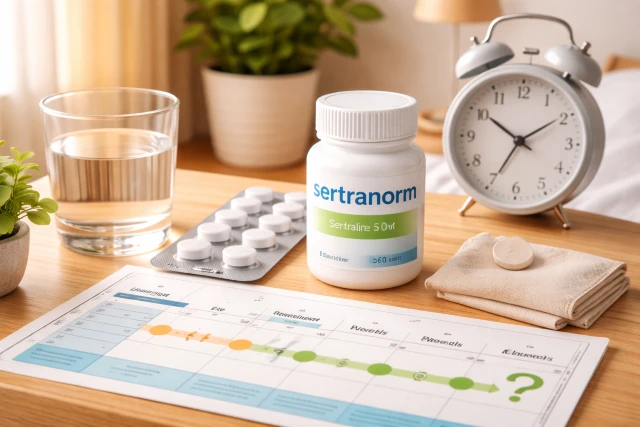
If you’ve been prescribed sertranorm for depression, the first questions usually sound the same: “How does this actually work in my brain?” and “When will I feel better?” Both are fair, because antidepressants can feel confusing at the start. sertranorm is used in some markets as a brand name for sertraline, a widely prescribed SSRI antidepressant used for major depressive disorder and several anxiety related conditions.
- What is sertranorm?
- How sertranorm works for depression
- How long does sertranorm take to work?
- Week by week: what many people notice (and what’s normal)
- Typical dosing and why doctors start low
- Common side effects and how to handle them
- Serious warnings you should know (without panic)
- What can make sertranorm work faster or better?
- When to talk to your doctor about changing the plan
- FAQs
- Conclusion
In this guide, you’ll get a clear, human explanation of what sertranorm does, what sertranorm changes people often notice week by week, why it can take time, and what to do if you hit common bumps like nausea, sleep issues, or feeling “worse before better.” This is general education, not personal medical advice, so if anything here doesn’t match your situation, it’s worth checking in with your prescriber.
What is sertranorm?
sertranorm is commonly described online as a brand of sertraline, which belongs to a group of antidepressants called selective serotonin reuptake inhibitors (SSRIs). SSRIs are among the most commonly used antidepressants because they’re effective for many people and tend to be easier to tolerate than older antidepressants.
Important note: brand names can vary by country and manufacturer. If you want to confirm what sertranorm contains in your case, check the box or leaflet for the active ingredient “sertraline” (or ask your pharmacist).
How sertranorm works for depression
Depression is not caused by “low serotonin” in a simple, one sentence way. But serotonin does play a big role in mood regulation, stress response, sleep, appetite, and emotional processing. SSRIs like sertraline work by changing how serotonin signaling happens in the brain over time.
Here’s the practical explanation:
Step 1: It blocks serotonin reuptake
Nerve cells communicate by releasing neurotransmitters (like serotonin) into the tiny gap between cells. Normally, serotonin is taken back up into the releasing cell by a transporter called SERT. Sertraline inhibits that transporter, so more serotonin stays available in the synaptic space for longer.
Step 2: The brain “rebalances” gradually
This is the part most people don’t hear up front: the helpful mood effects aren’t just from “more serotonin today.” Your brain adjusts receptor sensitivity and network activity gradually, and that adaptation is one reason antidepressants often take weeks to feel fully effective.
Step 3: Symptoms improve in a common pattern
Many people notice changes like improved sleep or slightly better energy before they feel emotionally “lighter.” That’s not a rule, but it’s common enough that clinicians often mention it when setting expectations.
How long does sertranorm take to work?
Most reputable patient guidance lands in a similar range:
- Some early changes can show up in 1 to 2 weeks
- More meaningful improvement often appears around 4 to 6 weeks
- Some people need up to 8 weeks (or dose adjustments) to see the full benefit
That timeline can feel slow when you’re struggling, but there’s a real biological reason behind it.
Week by week: what many people notice (and what’s normal)
Everyone’s experience is different, but this “week by week” view can make the first month feel less mysterious.
Week 1: side effects may show up before benefits
In the first week, some people notice:
- Nausea or upset stomach
- Headache
- Restlessness or jittery energy
- Sleep changes (insomnia or sleepiness)
This doesn’t mean the medication is “wrong” for you, but it does mean your body is adjusting. NHS guidance notes that side effects can happen when you start sertraline and many improve with time.
Week 2: small functional wins
This is where people sometimes notice subtle shifts:
- A bit more energy
- Slightly improved focus
- Less emotional “heaviness” for brief moments
These changes can be easy to miss. A good trick is to track one or two daily markers (sleep, appetite, getting out of bed, social contact). It helps you see progress that your mood might not recognize yet.
Weeks 3 to 4: clearer symptom movement
By weeks 3 and 4, many people begin to see more obvious benefits, such as:
- Less persistent sadness
- Reduced irritability
- Better ability to handle daily tasks
If nothing at all feels different by this point, it does not automatically mean failure, but it is a good time to update your clinician so they can decide whether to adjust the dose or give it more time.
Weeks 5 to 8: fuller benefit and fine tuning
This is the window where many patients feel the “main” effect:
- Mood lifts more consistently
- Motivation returns
- Anxiety that is intertwined with depression may ease
If you have partial improvement but not enough, clinicians often consider dose adjustments, adding psychotherapy, or switching strategies, depending on your response and side effects.
Typical dosing and why doctors start low
For major depressive disorder, sertraline is commonly started at 50 mg once daily, and can be increased gradually (often in weekly steps) up to a maximum of 200 mg/day, depending on response and tolerance.
Prescribers often start at a lower dose or go up slowly because:
- Early side effects are dose sensitive for many people
- A slower ramp can improve adherence
- It allows you to find the lowest effective dose
Do not change your dose on your own, even if you feel impatient. Dose changes should be guided by your clinician, especially because stopping or changing antidepressants too quickly can cause withdrawal like symptoms or symptom rebound.
Common side effects and how to handle them
Below are issues people commonly report with sertraline, plus practical ways clinicians often suggest managing them. (Always check with your prescriber for advice specific to you.)
Nausea or stomach upset
Nausea is one of the most common early complaints.
What often helps:
- Taking it with food (if your prescriber says that’s okay)
- Smaller, lighter meals for a few days
- Hydration
- Giving it time (many cases settle within a couple of weeks)
Sleep problems (insomnia or sleepiness)
Sleep changes can go either direction.
Practical approaches:
- If it makes you sleepy, ask your clinician whether taking it at night is appropriate
- If it causes insomnia, morning dosing may help (again, confirm with your clinician)
- Reduce caffeine later in the day, keep a consistent sleep schedule
Sexual side effects
Sexual side effects can occur with SSRIs and may persist for some people.
If this happens, don’t suffer in silence. Clinicians can sometimes adjust dose timing, consider add ons, or switch medications depending on your situation.
Feeling emotionally “flat”
Some people describe emotional blunting. If it’s mild and depression relief is strong, it may feel like a fair trade. If it’s severe, it’s worth discussing with your prescriber because dose adjustment or another option may help.
Increased anxiety early on
It sounds unfair, but some people feel more restless or anxious at the beginning. This can settle as the body adapts, but if you feel significantly worse or unsafe, contact your clinician promptly.
Serious warnings you should know (without panic)
It’s good to be informed, not scared. The key risks are rare, but important.
Suicidal thoughts warning (especially under 25)
Antidepressants carry a warning about increased risk of suicidal thoughts and behaviors in some children, teens, and young adults, especially early in treatment or when doses change. Close monitoring is recommended.
If you ever feel in danger of harming yourself, seek urgent help immediately in your local area.
Serotonin syndrome
This is uncommon but can be serious, especially if sertraline is combined with other serotonergic medications. Symptoms can include agitation, confusion, sweating, tremor, and fever. It is a known warning in prescribing information.
Bleeding risk and drug interactions
SSRIs can increase bleeding risk, particularly when combined with NSAIDs (like ibuprofen) or blood thinners. Always tell your clinician what you take, including supplements.
What can make sertranorm work faster or better?
You can’t force a medication to work overnight, but you can remove the common obstacles that slow progress.
1) Take it consistently
Missing doses can cause ups and downs and make it harder to judge whether it’s helping. If you miss a dose, follow your prescribing instructions rather than doubling up. (Most medication guides advise not taking extra to “catch up,” but always follow the specific leaflet you received.)
2) Give it a fair trial
For depression, many guidance sources suggest evaluating response over several weeks, often around 6 to 8 weeks, depending on symptom severity and side effects.
3) Combine it with psychotherapy if possible
Medication can help symptoms, but therapy helps patterns, triggers, and coping skills. Major depression guidelines commonly discuss structured psychotherapy as a key treatment option, either alone (for mild cases) or alongside medication.
4) Track progress in a simple way
Depression makes memory unreliable. A quick weekly score helps. Many clinicians use tools like PHQ 9 to monitor improvement.
You don’t need to obsess over numbers, just note trends.
When to talk to your doctor about changing the plan
Contact your prescriber sooner if you have severe side effects, worsening mood, or any suicidal thoughts. Otherwise, it’s reasonable to check in if:
- Side effects are persistent and interfering after a few weeks
- You see zero improvement after several weeks of consistent use
- You improved a bit but then plateaued
Common next steps can include dose adjustments, adding psychotherapy, switching antidepressants, or checking for other contributors like thyroid issues, sleep disorders, substance use, or medication interactions.
FAQs
Does sertranorm change your personality?
It shouldn’t turn you into a different person. The goal is to reduce depressive symptoms such as persistent low mood, hopelessness, and loss of interest. If you feel emotionally numb or unlike yourself in a concerning way, it’s worth discussing with your clinician.
Can I drink alcohol while taking sertranorm?
Alcohol can worsen depression, increase sedation, and interfere with sleep. Safety advice varies based on your health history and other meds, so it’s best to ask your prescriber or pharmacist rather than guessing.
Can I stop sertranorm once I feel better?
Many people need a continuation phase after they improve to reduce relapse risk. Stopping suddenly can also cause discontinuation symptoms, so tapering should be supervised.
Conclusion
sertranorm for depression can be genuinely life changing, but it usually works in steps, not in a single dramatic moment. The medicine helps by adjusting serotonin signaling, and your brain gradually adapts over weeks. Early side effects can show up before mood benefits, and the most meaningful improvement often takes about 4 to 6 weeks, sometimes up to 8 weeks depending on the person and dose.
If you stay consistent, track your progress, and keep communication open with your clinician, you give yourself the best odds of success. And if the first plan is not perfect, that is not a dead end. It is a normal part of treating depression and finding the right fit.
For a quick reference, SSRIs like sertraline belong to the category called a Selective serotonin reuptake inhibitor, and understanding that class can make the whole process feel less mysterious.