


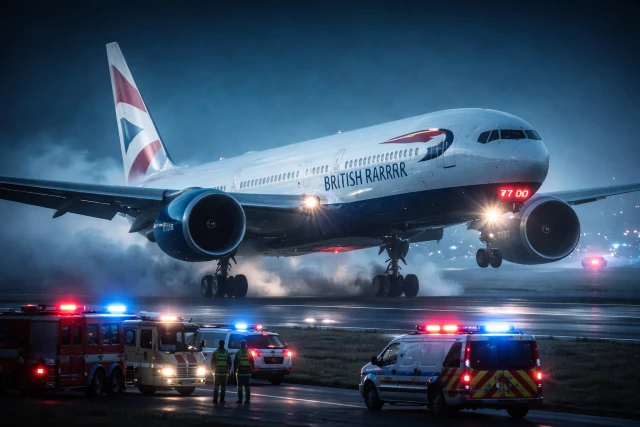
At cruising altitude, most flights feel predictable. The cabin lights are dimmed, passengers settle in, and time stretches into a quiet routine of movies, meals, and sleep. But on Flight BA286, that routine did not last. In the middle of a long-haul journey, the aircraft suddenly transmitted signals that immediately captured the attention of air traffic controllers and flight trackers. Within moments, the calm of a typical transatlantic crossing shifted into an unfolding emergency. This mid-air crisis report became the kind of story aviation watchers recognize instantly: one flight, one sudden event, and a chain of procedures designed to protect hundreds of lives at once.
- What Happened to Flight BA286?
- Why an “Unexpected Landing” Feels So Dramatic at 35,000 Feet
- Flight BA286 and the Significance of Squawk 7700
- Aviation Emergency Timeline: How Events Usually Unfold
- In-Flight Medical Emergencies: How Common Are They?
- The Cabin Experience: What Passengers Often Notice During an Emergency
- Flight BA286: Why Long-Haul Flights Require Extra Emergency Readiness
- Air Traffic Control Role in a Flight Emergency
- Aircraft Safety Procedures That Protect Lives During Emergencies
- The Psychology of a Mid-Air Crisis: Why It Feels Worse Than It Is
- What We Know About the Outcome of Flight BA286
- Why Emergency Landings Often End With Safe Outcomes
- Public Interest and Viral Tracking: How Flight BA286 Became a Trending Story
- Frequently Asked Questions
- Conclusion: Flight BA286 and the Reality of Aviation Safety
The unexpected landing of Flight BA286 was not just a headline. It became a real-time example of how aircraft safety procedures work under pressure, how crews respond when seconds matter, and why aviation remains one of the most tightly regulated industries on Earth. This documentary-style report breaks down what happened, what is publicly known, why emergency landings occur, and how modern systems make a safe outcome possible even when everything changes at 35,000 feet.
What Happened to Flight BA286?
Public flight-tracking and aviation monitoring reports indicate that Flight BA286, a British Airways Airbus A380 service operating from San Francisco (SFO) to London Heathrow (LHR), declared a general emergency during its journey and requested priority handling for landing. One widely reported detail is that the aircraft used squawk 7700, an internationally recognized emergency transponder code.
Aviation monitoring sources stated that the aircraft was cruising at a high altitude over the United Kingdom region after crossing the Atlantic when the emergency was declared. It then proceeded to land safely at London Heathrow with priority handling.
While online reports have circulated different theories, the most commonly repeated information in aviation monitoring coverage is that the emergency declaration was connected to a medical situation on board, which often triggers urgent priority landing procedures.
Why an “Unexpected Landing” Feels So Dramatic at 35,000 Feet
When a long-haul flight suddenly changes course, the experience inside the cabin shifts instantly. Passengers may not know what is happening, but small signals can change the atmosphere quickly. Cabin crew may move faster than usual, the cockpit may make an announcement with limited details, and the aircraft may begin a controlled descent that feels unusual.
At 35,000 to 41,000 feet, aviation operations are highly structured. Every action is governed by training and procedure. The suspense comes from the fact that passengers cannot see what the flight deck sees. They cannot access real-time engine readings, medical condition data, weather updates, or air traffic clearance. They only feel the changes.
When a flight declares an emergency, it is not a sign of chaos. It is a sign of control. The crew follows established aircraft safety procedures, and air traffic control begins clearing routes, coordinating emergency services, and prioritizing the aircraft’s arrival.
Flight BA286 and the Significance of Squawk 7700
One of the most important technical details widely mentioned in connection with Flight BA286 is the use of squawk 7700. In aviation, squawk codes are transponder signals that aircraft use to communicate with air traffic control. Squawk 7700 is reserved for a general emergency and immediately signals that the aircraft needs urgent priority handling.
The moment this code appears on tracking systems, it becomes visible not only to controllers but also to aviation watchers globally. The suspense spreads fast because a squawk 7700 can relate to multiple serious scenarios. It can represent a medical emergency, technical issue, fire warning, pressurization problem, or any situation where the crew believes priority landing is necessary.
The reason squawk 7700 is so powerful is because it is universal. Controllers everywhere recognize it instantly, and it triggers a coordinated response across different systems.
Aviation Emergency Timeline: How Events Usually Unfold
Although every emergency is different, aviation emergency timeline patterns tend to follow a structured flow. This section explains how an emergency like the one reported for Flight BA286 typically moves from first warning to safe landing.
Inside the cockpit, the first sign of trouble is often an alert, a report from cabin crew, or a situation that develops unexpectedly such as a passenger medical emergency. When the event is severe enough, the crew begins a rapid evaluation.
The crew identifies the nature of the emergency, communicates with cabin crew, and begins to determine whether the aircraft can continue or needs to divert or request priority landing. In medical emergencies, the decision often depends on the severity of the case and whether immediate medical care is needed on the ground.
Next, the crew communicates with air traffic control. If the situation requires priority handling, the emergency transponder code is used and the aircraft receives clearance to descend and land ahead of other traffic.
Meanwhile, the cabin crew manages passenger safety, coordinates any medical support on board if available, and prepares the cabin for landing. On the ground, emergency services are notified and positioned.
This is the invisible part of aviation safety. Passengers may experience anxiety, but behind the scenes the system is operating with disciplined precision.
In-Flight Medical Emergencies: How Common Are They?
Medical events in the air are more common than many people assume, but diversions remain relatively rare. The New England Journal of Medicine reported that medical emergencies occur in approximately 1 of every 604 flights based on consultations with a ground-based medical support center, although it notes this may underestimate because not all events are reported.
A more recent large cohort study published in JAMA Network Open analyzed 77,790 in-flight medical events across 84 airlines and found that aircraft diversion occurred in about 1.7% of cases, most often for neurological and cardiac emergencies.
This data matters because it explains why airlines and crews train extensively for medical events. A single health emergency can require rapid coordination and immediate decisions. On long-haul flights, the aircraft may be hours away from the departure airport, making diversion or priority landing one of the most critical decisions a flight crew can make.
The Cabin Experience: What Passengers Often Notice During an Emergency
The most suspenseful part of a mid-air crisis report is the passenger experience. Passengers often describe emergency situations as confusing, because communication from the flight deck is usually limited to essential information. Airlines avoid giving speculative details before confirming the situation.
In an emergency, passengers may notice the following without fully understanding the cause.
The aircraft may begin descending sooner than expected, and the cabin pressure sensation may change. The crew may ask everyone to remain seated and may secure cabin items quickly. Medical announcements may request assistance from healthcare professionals on board. In some cases, flight attendants may gather around a passenger to provide care.
When an emergency landing is expected, the crew may give a brace-position briefing depending on the situation. In many medical emergencies, however, the landing itself is normal, simply prioritized and rapid.
This mixture of visible urgency and limited explanation is why emergency landings feel so intense to passengers.
Flight BA286: Why Long-Haul Flights Require Extra Emergency Readiness
Long-haul flights like Flight BA286 carry hundreds of passengers and operate for many hours, often crossing oceans and remote areas where diversion options are limited. That is why aircraft safety procedures on long-haul routes are designed with redundancy.
Aircraft systems include multiple backups, crews include more staff than short flights, and onboard supplies include emergency medical kits, oxygen, and defibrillators on many international routes. Aviation medical guidance documents emphasize the importance of onboard medical supplies, crew training, and structured response protocols during in-flight medical events.
For aircraft like the Airbus A380, the scale is larger. A380 flights often carry more than 400 people, which means any emergency has a larger human impact. That reality is why long-haul aviation is highly procedural and closely monitored.
Air Traffic Control Role in a Flight Emergency
Air traffic control becomes one of the most important parts of the story during an emergency. When a flight declares an emergency, controllers immediately begin prioritizing the aircraft and preparing for arrival.
The first step is clearing the aircraft’s route. This means ensuring the plane can descend safely without conflicting traffic. The second step is coordinating runway availability. The third step is alerting emergency services to prepare for medical or technical response.
This process is often invisible to passengers, but it is a key reason aviation emergencies often result in safe landings. The system is built for rapid response.
Aircraft Safety Procedures That Protect Lives During Emergencies
Aircraft safety procedures exist because aviation risks must be managed systematically. Emergency response is never improvised. It is based on training, checklists, and protocols designed to reduce error under stress.
In a general emergency declaration, flight crew actions typically focus on these goals.
They identify the emergency category and prioritize threats. They communicate clearly with air traffic control. They coordinate with cabin crew to manage passenger safety. They prepare the aircraft for landing as soon as possible.
When a medical emergency occurs, procedures also involve coordinating medical assistance onboard and communicating with ground-based medical support if available. Many airlines use medical support services that advise the crew and guide treatment decisions.
The point is not only to land quickly, but to land safely and efficiently while ensuring the affected passenger receives help immediately after landing.
The Psychology of a Mid-Air Crisis: Why It Feels Worse Than It Is
Even when a landing is safe, passengers often describe it as terrifying. This is because humans naturally fear situations where they have no control and limited information.
At 35,000 feet, passengers cannot step out of the situation. They must rely completely on the crew. The brain interprets uncertainty as danger, even when the reality is controlled.
This is why airline communications are careful and why crew training includes passenger management. Calm instruction and authority reduce panic, and simple actions like keeping passengers seated and informed can prevent chaos.
What We Know About the Outcome of Flight BA286
Available monitoring reports and online aviation tracking coverage indicate that Flight BA286 landed safely at London Heathrow after declaring the emergency.
Safe landing is not a small detail. It is the final proof that aviation systems worked as designed. The emergency declaration signaled a need for priority and urgency, and the safe landing confirmed that crew and support systems managed the situation effectively.
Why Emergency Landings Often End With Safe Outcomes
The aviation industry is built around risk management. Emergency landings happen precisely because crews do not wait for situations to worsen. When something becomes uncertain, the safest decision is often to land.
This is why emergency declarations are common even when the outcome is safe. A medical emergency might require urgent hospital access. A technical warning might require inspection on the ground. A cabin issue might require immediate resolution.
Modern aviation is designed so that “emergency” is not chaos. It is controlled urgency.
Public Interest and Viral Tracking: How Flight BA286 Became a Trending Story
Flight incidents trend quickly in 2026 because real-time flight tracking is widely accessible. Websites and apps allow people to monitor flights live. The moment a squawk 7700 appears, social media spreads the event worldwide.
This creates instant suspense. People see the descent, the route changes, and the emergency code long before official statements are released.
This gap between real-time visibility and official confirmation is one reason aviation stories feel intense. The public sees the signals but not the cause.
Frequently Asked Questions
Why did Flight BA286 make an unexpected landing?
Flight BA286 reportedly declared a general emergency and requested priority landing. Aviation monitoring sources most commonly cited a medical emergency as the trigger.
What does squawk 7700 mean?
Squawk 7700 is the international transponder code used to indicate a general emergency. It signals air traffic control that the aircraft requires immediate priority handling.
Are in-flight medical emergencies common?
Yes. Medical emergencies occur in about 1 in every 604 flights based on a major medical review, though reporting varies. Diversions happen in a small percentage of medical events.
Do emergency landings usually end safely?
Most emergency landings result in safe outcomes because aviation procedures are designed for early intervention, structured response, and coordinated support.
What happens after an emergency landing?
After landing, emergency services meet the aircraft. The affected passenger receives care if required. The aircraft may be inspected, and the airline documents the incident through internal safety reporting systems.
Conclusion: Flight BA286 and the Reality of Aviation Safety
The unexpected landing of Flight BA286 became a suspenseful moment because it reminded the public how quickly normal can change in the sky. At 35,000 feet, even a single emergency signal can turn a quiet journey into an urgent operation. But the most important part of the story is not fear. It is systems.
Flight BA286 shows how aviation emergency timeline procedures work, how mid-air crisis report signals such as squawk 7700 trigger coordinated action, and how aircraft safety procedures protect passengers even during sudden high-stress moments. In the end, the safe landing reflects the strength of modern aviation training and emergency response planning.
The broader field of aviation explains why structured safety systems exist and how emergency procedures are standardized worldwide, ensuring that even unexpected events are handled with discipline and coordination.