


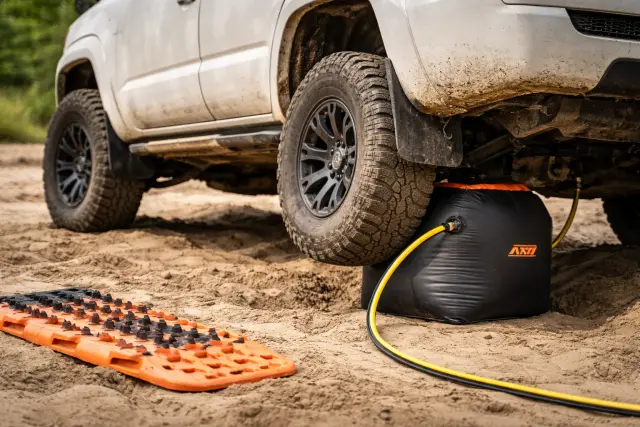
An airbag jack is one of those tools that looks almost too simple to be serious. It is basically a tough inflatable bag that lifts a vehicle when you feed it air, either from a compressor or, in some off-road models, from the vehicle’s exhaust. But once you see it in action, it makes a lot of sense. The wide footprint spreads weight across a bigger area than many traditional jacks, which can be a big deal on sand, mud, gravel, or uneven shoulders. Used correctly, an airbag jack can make tire changes, recovery, and certain maintenance tasks faster and less stressful.
- What is an airbag jack and how does it work?
- Airbag jack vs other jacks: where it shines
- The best airbag jack uses for everyday vehicles
- The best airbag jack uses for off-road and overlanding
- Best airbag jack uses for light maintenance
- Safety rules that make an airbag jack “easy” instead of risky
- A beginner-friendly checklist for airbag jack use
- Where to place an airbag jack on different vehicles
- Airbag jack use cases by vehicle type
- Common mistakes that cause most airbag jack problems
- FAQ: airbag jack questions people actually ask
- Conclusion
This guide walks through the best real-world uses of an airbag jack for cars, SUVs, and off-road vehicles, plus the safety habits that matter most.
What is an airbag jack and how does it work?
An airbag jack (often called an air jack or inflatable jack) lifts a vehicle by inflating a heavy-duty reinforced bag. As the bag expands, it pushes upward against the vehicle and raises it off the ground. Some designs inflate via shop air or a portable compressor, while “exhaust” style versions inflate using the vehicle’s exhaust gases through a hose (common in off-road recovery kits).
Two things make airbag jacks feel different than bottle jacks or hi-lift jacks:
- They lift with a wide base (more surface area on the ground).
- They can work even when you do not have a perfect hard lifting point, depending on vehicle clearance and where you place the bag.
That said, they are still lifting tools, not “support” tools. If you need to work under a vehicle, you still use proper stands and safety procedures.
Airbag jack vs other jacks: where it shines
Before we get into use cases, it helps to understand why people reach for an airbag jack in the first place.
Where an airbag jack is especially useful
- Soft surfaces where a narrow jack base can sink
- Uneven terrain where stability is tricky
- Recovery situations where you need lift quickly and with less fiddling
- Vehicles with limited safe jacking points for certain angles
Where other jacks may be better
- Precision lifting at a specific factory jacking point
- Tight spaces with very low clearance (unless your airbag jack is designed for that)
- Heavy mechanical work under the vehicle (where stands, ramps, or a shop lift are better)
Off-road guides often point out that inflatable airbag jack work well when traditional jacks struggle in sand and mud because the load is distributed across a bigger contact patch.
The best airbag jack uses for everyday vehicles
1) Quick roadside tire changes on uneven shoulders
On paper, a roadside tire change sounds simple. In real life, you are often dealing with sloped pavement, loose gravel, or a shoulder that is not exactly flat. An airbag jack can help because it lifts smoothly and spreads load across a larger footprint, so it is less likely to dig in compared to a narrow base jack.
To do this safely:
- Pull as far from traffic as possible and turn on hazard lights.
- Use wheel chocks if you have them.
- Inflate slowly and watch the bag, the vehicle, and the ground together.
- The moment the tire clears, stop and stabilize your setup.
If you plan to remove a wheel and put any part of your body near or under the vehicle, use stands. Safety authorities stress that you should not get under a vehicle supported only by a jack.
2) Lifting SUVs and crossovers with limited jacking comfort
Many SUVs sit higher than small cars, but the factory scissor jack that comes with them can still feel sketchy, especially on soft ground. Airbag jacks are popular with SUV owners because they can lift with less wobble when placed well and because the bag can make contact across a broader area under the chassis, depending on the model.
Key tip: your jack’s rating must match what you are lifting. Regulations and safety guidance emphasize using a jack with a rating sufficient to lift and sustain the load and ensuring the rated load is marked.
3) Helping with wheel swaps for seasonal tires
If you do seasonal wheel swaps (winter to summer, or all-terrains to road tires), an airbag jack can speed things up, especially if your driveway surface is imperfect.
Best practice:
- Lift one end at a time and use stands if you’re going beyond a quick wheel swap.
- Keep your hands and feet clear while inflating.
- Never “test stability” by shaking the vehicle aggressively on the bag.
4) Raising a vehicle to place traction boards or recovery gear
Even outside hardcore off-roading, people get stuck in snow-packed parking areas, wet grass fields, or sandy beach pull-offs. An airbag jack can lift enough to slide traction boards, rocks, or other grip aids under the tires.
This is one of the most practical “everyday” uses because it is about getting moving again, not doing repairs.
The best airbag jack uses for off-road and overlanding
Off-road is where an airbag jack earns its reputation. Many off-road reviews describe air jacks as especially effective in sand, mud, and uneven terrain, and explain that they can lift a vehicle even when it is bogged down close to the chassis.
1) Sand recovery when a normal jack sinks
Sand is a classic problem: a narrow jack base sinks, the jack tilts, and you end up digging a bigger hole. An airbag jack’s wide footprint can reduce sinking, especially if you place a protective mat or a flat board under it.
A reliable sand recovery routine looks like this:
- Clear the sand around the bag placement area.
- Use a base mat or traction board under the bag if needed.
- Inflate slowly and lift only as much as needed.
- Fill ruts and create a firmer “ramp” before attempting to drive out.
2) Mud recovery when you need lift without a perfect jacking point
Mud can swallow tires, and sometimes your safe factory jacking points are not accessible or not practical to use. Air jacks are often promoted for recovery because the bag can lift across a larger area and because it can be positioned where it makes sense for the terrain and obstacle situation.
Important: some products are marketed specifically for recovery, not maintenance. Pay attention to how your model is intended to be used and follow the manufacturer’s guidance.
3) Snow recovery without digging for half an hour
In snow, you usually lose time in two places:
- digging around the tires
- trying to get a jack to stand on something firm
Airbag jacks help by lifting quickly so you can pack snow, place traction boards, or reposition the vehicle. The wide base can be a big help if you use a mat underneath.
4) Lifting a stuck vehicle to re-seat a slipped tire bead
This is more of an experienced use case, but it happens in off-road driving. If a tire loses its bead seal at low pressure, you may need to lift and reset. Depending on your situation and tools, an airbag jack can assist with getting the wheel off the ground quickly. In practice, this job also requires the right inflation tools, safety judgment, and a calm approach.
5) Recovery when you are high-centered
When the vehicle’s belly is resting on sand or a ridge, a typical jack can struggle because the suspension droops and you need a larger lift to free the tires. Some air jack guides note that inflatable designs can still be useful when the vehicle is bogged close to the chassis because of how they lift and distribute load.
Best airbag jack uses for light maintenance
Let’s be clear: an airbag jack is not a shop lift. But it can support certain light tasks if you combine it with proper support equipment.
Tasks that can make sense (with proper supports)
- Tire rotation
- Brake pad and rotor swaps (only with stands supporting the vehicle)
- Undercar inspections where you are not going underneath while it is on the jack
- Placing jack stands to transfer load safely
Workplace safety guidance is blunt about this: do not get under a vehicle supported only by a jack, use suitable safety stands, and ensure supports are positioned properly.
Safety rules that make an airbag jack “easy” instead of risky
The tool itself is not magic. Safe lifting is mostly about habits.
1) Match the capacity to the job
Use a jack with a rating sufficient to lift and sustain the load, and confirm the rating is clearly marked on the jack.
A practical way to think about it:
- You do not need a jack rated for your vehicle’s full gross weight to lift one corner.
- But you do need enough capacity to handle real-world conditions, uneven loading, and the way your vehicle shifts as it rises.
If you are unsure, choose higher capacity, not “barely enough.”
2) Never treat a jack as long-term support
Multiple safety sources emphasize the same core principle: a jack lifts, but proper stands support. Do not work under a vehicle that is only supported by a jack.
The UK Health and Safety Executive has repeatedly warned about fatal crushing risks from incorrectly supported vehicles, including deaths where vehicles slipped while workers were underneath.
3) Build a stable foundation
If the ground is not firm, block or stabilize the base. OSHA’s jack standard highlights the need for a firm foundation and blocking when necessary.
For off-road, that usually means:
- a base mat
- a flat board
- a traction board under the bag if the surface is very soft
4) Inflate slowly and watch for shifting
Airbag jacks can lift quickly. That speed is part of the appeal, but it also means you should take your time:
- Inflate in short bursts
- Pause to check the bag’s shape and contact points
- Stop as soon as you have enough lift
5) Keep your body out of the danger zone
Even a small slip can be catastrophic. The safest posture is one where you can step back easily and your hands are not under any part of the vehicle while lifting.
A beginner-friendly checklist for airbag jack use
Use this quick checklist every time. It keeps you from forgetting the basics when you are tired, rushed, or annoyed.
- Confirm your airbag jack capacity is appropriate
- Park on the flattest surface available
- Engage parking brake, chock wheels if possible
- Clear sharp rocks, branches, and debris from under the bag
- Place a base mat if the ground is soft
- Place the bag under a solid contact area recommended for your vehicle
- Inflate slowly and monitor for shifting
- If you are doing any work beyond a simple lift, transfer the load to stands
- Deflate slowly when finished
Where to place an airbag jack on different vehicles
Placement depends on the design of your jack and your vehicle’s underside. In general, you want:
- strong structural contact (frame rails on body-on-frame trucks, reinforced lift areas on unibody vehicles)
- no contact with fragile plastic undertrays
- no contact with hot exhaust components (especially if you are using an exhaust-inflated model)
If your vehicle has a manual with lift points, follow it. For recovery-specific air jacks, the goal is often to lift enough to change what is happening at the tires (traction boards, fill holes, remove obstacles) rather than to create a stable maintenance platform.
Airbag jack use cases by vehicle type
Here is a quick guide to what typically makes the most sense.
| Vehicle Type | Best Airbag Jack Uses | Notes |
|---|---|---|
| Sedan / hatchback | Roadside tire change, wheel swaps | Watch low clearance and underbody plastics |
| Crossover SUV | Tire change, seasonal wheel swaps, mild snow recovery | Capacity matters because vehicles are heavier |
| Body-on-frame SUV | Off-road recovery, traction board placement | Often has better underbody lift points |
| Pickup truck | Mud and sand recovery, lifting for traction aids | Heavy rigs often need higher capacity |
| Overland build | High-centered recovery, soft terrain lift | Carry base mat and repair kit |
Common mistakes that cause most airbag jack problems
Mistake 1: Lifting too high “just because you can”
Fix: Lift only to the minimum height needed to complete the task.
Mistake 2: Skipping the base mat on soft ground
Fix: Carry a mat, board, or traction board specifically for this.
Mistake 3: Treating the inflated bag like a jack stand
Fix: If you need to work near or under the vehicle, use proper safety stands.
Mistake 4: Ignoring product intent
Some inflatable jacks are specifically marketed for recovery and explicitly warn against use for maintenance tasks. Always follow the guidance that comes with your model.
FAQ: airbag jack questions people actually ask
Is an airbag jack safe?
It can be safe when used correctly: proper capacity, stable ground, controlled inflation, and correct support practices. Safety authorities consistently warn against being under vehicles supported only by jacks, regardless of jack type.
Can an airbag jack lift a SUV or truck?
Yes, many are designed for SUVs and trucks, but you must match the jack’s rated capacity to your vehicle and your use case. OSHA rules emphasize ensuring the jack rating is sufficient to lift and sustain the load.
Is an exhaust airbag jack bad for the vehicle?
Exhaust-inflated designs are widely used for off-road recovery, but you should avoid overheating hoses, watch for secure connections, and follow the manufacturer’s instructions. Many guides describe exhaust or compressor inflation as normal operating methods.
Do I still need jack stands?
If you are doing work that puts you under the vehicle or in a position where a slip would trap you, yes. Multiple safety sources say to use suitable safety stands and not rely on a jack alone.
Conclusion
The best thing about an airbag jack is how it reduces friction in moments that usually feel stressful: a flat tire on imperfect ground, a vehicle stuck in sand, or an SUV that needs just enough lift to slide traction boards underneath. Because the lift is smooth and the footprint is wide, it often performs better than narrow-base jacks in soft terrain, which is why off-roaders keep it in their recovery kits.
In short, if you want a simple way to make lifting and recovery easier, start here: learn your placement points, practice once at home, and keep the routine consistent. When you do, an airbag jack becomes less of a gadget and more of a dependable tool you will be glad you packed. you will also see the term jack used as the general name for lifting devices, and it helps to understand the broader category when choosing recovery gear.