


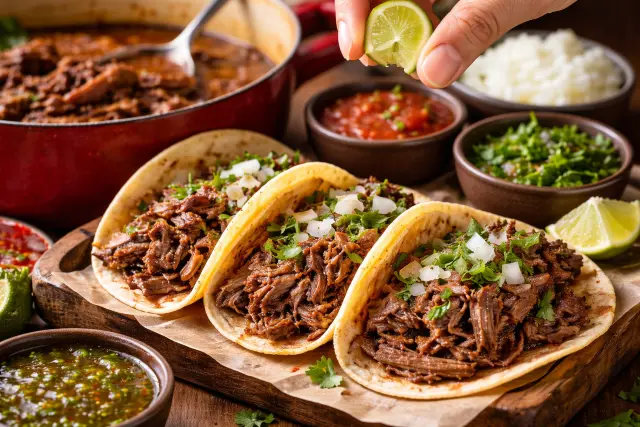
If you’ve ever bitten into a taco with meat so tender it practically melts, there’s a good chance it was barbacoa. It’s rich, deeply savory, and somehow feels both comforting and special at the same time. The best part is that barbacoa is not just one “recipe” it’s a whole tradition that stretches back centuries, shaped by regions, celebrations, and the simple magic of slow cooking.
- What is barbacoa?
- Barbacoa meaning and where the word comes from
- A quick (but real) history of barbacoa
- Why barbacoa tastes so good (the slow-cooking science)
- Best cuts of meat for barbacoa (and what each one tastes like)
- What makes barbacoa “restaurant-style”?
- Restaurant-style barbacoa at home (oven method)
- Slow cooker barbacoa (set it and forget it)
- Pressure cooker or Instant Pot barbacoa (fast, still legit)
- Food safety and doneness: what temperature should barbacoa reach?
- Building flavor like a taqueria
- The classic barbacoa “broth” (and why you should keep it)
- How to serve barbacoa (tacos, bowls, and more)
- Storage, leftovers, and reheating (so it stays juicy)
- Common mistakes that make barbacoa disappointing
- Barbacoa vs birria vs carnitas (simple differences)
- Frequently asked questions about barbacoa
- Conclusion
In this guide, you’ll learn what barbacoa really means, where it comes from, which cuts give you that restaurant-style texture, and how to make it at home without digging a pit in your backyard. For more food trends and guides, visit barbacoa.
What is barbacoa?
At its core, barbacoa is a method of cooking meat slowly until it becomes intensely flavorful and fall-apart tender. Traditionally in Mexico, barbacoa was made in an earth oven, cooked in a pit lined and covered with agave (maguey) leaves. Over time, the word also came to refer to the finished dish: the succulent shredded meat, often served in tacos with onions, cilantro, salsa, and sometimes a bowl of broth made from the drippings.
Today, you’ll see barbacoa made in many modern ways: slow cooker, oven, pressure cooker, even a smoker. The goal stays the same: low heat, time, and the right cut of meat.
Barbacoa meaning and where the word comes from
The word “barbacoa” has a fascinating history. Many scholars trace it back to the Taíno language, where a similar word referred to a wooden framework used in cooking and other everyday uses. Later, Spanish colonizers applied the term broadly, and in Mexico it became associated with the earth-oven cooking method used by Indigenous communities.
That’s one reason barbacoa can mean slightly different things depending on where you are. In some places it points to the pit method. In others it simply means slow-cooked, shredded meat served taco-style.
A quick (but real) history of barbacoa
Barbacoa is old. Really old.
Long before modern kitchens, people were cooking with earth ovens: digging pits, heating stones, wrapping food in leaves, and sealing everything so it cooked slowly with trapped heat and steam. In Mexico, this often meant wrapping meat in maguey leaves, letting it roast for hours until it turned unbelievably tender and fragrant.
What’s interesting is how barbacoa became connected to community. Traditional barbacoa is not typically a “random Tuesday dinner” kind of thing. It’s tied to gatherings, markets, and celebrations. The long cook time makes it perfect for weekends and special events: start it early, let it go low and slow, then serve it family-style with tortillas and salsas.
Why barbacoa tastes so good (the slow-cooking science)
Barbacoa isn’t just about seasoning. The texture comes from what low heat does to tough cuts.
Many of the best barbacoa cuts are loaded with connective tissue. When you cook them slowly, collagen gradually breaks down into gelatin. That gelatin is what gives barbacoa its silky, juicy, “how is this so tender?” feel. A common rule of thumb is that collagen breakdown becomes noticeable as cooking temps move into the 160F to 180F range, especially over time.
This is also why barbacoa is forgiving. If you pick the right cut and give it enough time, it almost can’t help but turn tender.
Best cuts of meat for barbacoa (and what each one tastes like)
If you want restaurant-style barbacoa at home, your meat choice matters more than fancy equipment.
Here are the best options, from most traditional to most accessible.
Beef cheeks (the “restaurant texture” champion)
Beef cheeks are famous for a reason: they shred like a dream and stay moist. They have a rich, almost luxurious mouthfeel because they’re collagen-heavy.
What to expect:
- Deep beef flavor
- Ultra-tender shred
- Slightly richer finish than chuck
Chuck roast (the easiest, most available)
Chuck roast is the weeknight-friendly hero. It’s widely available, affordable compared to specialty cuts, and still gives you that classic shred.
What to expect:
- Classic beefy flavor
- A little leaner than cheeks, still juicy if cooked right
- Great for tacos, burritos, bowls
Beef brisket (bolder, barbecue-adjacent)
Brisket barbacoa can be incredible, especially if you like that rich, “slow-cooked all day” taste. It can dry out if rushed, but when it’s done right it’s unforgettable.
What to expect:
- Strong beef flavor
- Slightly firmer shred than cheeks
- Very satisfying, especially for big batches
Lamb shoulder or goat (more traditional in many regions)
In many traditional contexts, barbacoa is associated with lamb or goat cooked in a pit and wrapped in maguey leaves. It’s aromatic and distinctive, not “gamey” when cooked properly, but definitely its own thing.
What to expect:
- Rich, savory flavor
- Slightly more pronounced aroma than beef
- Excellent with bright salsas and lime
A simple “best cut” table
| Cut | Best for | Texture | Flavor level | Difficulty |
|---|---|---|---|---|
| Beef cheeks | Closest to restaurant barbacoa | Super silky shred | High | Medium (harder to find) |
| Chuck roast | Easy home barbacoa | Tender shred | Medium-high | Easy |
| Brisket | Big-batch, bold flavor | Firm-tender shred | High | Medium |
| Lamb shoulder | Traditional vibe | Very tender | High | Medium |
| Goat | Classic earth-oven style | Tender, juicy | High | Medium |
If you can’t find cheeks, don’t stress. Chuck roast can still taste like you bought it from your favorite taco spot, especially if you build flavor in the braising liquid.
What makes barbacoa “restaurant-style”?
Restaurant barbacoa usually has three things going on:
- Deep seasoning in the cooking liquid
Not just salt and pepper. Think dried chiles, garlic, cumin, oregano, and something tangy. - A rich braising broth
The drippings matter. That liquid becomes part sauce, part dipping broth, part flavor booster. - The right shred and finish
The meat is shredded, then often tossed back with some strained cooking liquid to keep it glossy and intensely seasoned.
In other words, it’s not only how you cook it. It’s how you finish it.
Restaurant-style barbacoa at home (oven method)
This is the most consistent method for a “serious” home result. It’s hands-off, forgiving, and gives you the deep flavor you want.
Ingredients (classic flavor profile)
- 3 to 4 lb beef chuck roast (or beef cheeks if available)
- 2 to 3 dried guajillo chiles, seeded
- 1 to 2 dried ancho chiles, seeded
- 4 cloves garlic
- 1 medium onion, roughly chopped
- 2 tablespoons apple cider vinegar or lime juice
- 1 tablespoon ground cumin
- 1 teaspoon dried oregano
- 1 to 2 chipotle peppers in adobo (optional for heat)
- 2 bay leaves
- 3 cups beef broth (or water plus a bouillon base)
- Salt and black pepper
- Optional: a small cinnamon stick (tiny amount, very subtle warmth)
Step-by-step method
- Toast and soften the chiles
Quickly toast dried chiles in a dry pan for 10 to 20 seconds per side, just until fragrant. Then soak them in hot water for 15 minutes until soft. - Blend the sauce
Blend softened chiles with garlic, onion, vinegar, cumin, oregano, broth, and a pinch of salt until smooth. If it’s thick, add a splash more broth. - Season the meat
Pat the meat dry, salt it generously, and add pepper. If you have time, let it sit for 20 minutes so the seasoning sticks better. - Braise low and slow
Place meat in a Dutch oven or deep roasting pan. Pour sauce over it, add bay leaves, cover tightly, and cook at 300F until the meat shreds easily. For chuck roast, that’s commonly 3.5 to 4.5 hours depending on thickness. - Shred and “gloss” it
Pull the meat out, shred it, then return it to the pot with a ladle or two of cooking liquid. This step is where it starts tasting like a taco shop. - Taste and adjust
Add salt, a squeeze of lime, or a spoon of broth as needed.
How to know it’s done
Don’t go by time alone. Barbacoa is ready when:
- A fork twists and pulls the meat apart easily
- The shred looks moist, not stringy and dry
- The connective tissue has softened, not chewy
If it shreds but feels slightly tight, it likely needs a little more time.
Slow cooker barbacoa (set it and forget it)
If you want barbacoa with minimal effort, the slow cooker is the easiest route.
How to do it:
- Make the same chile sauce (or use a simplified version with chili powder and broth if needed)
- Cook on low until shreddable, often 8 to 10 hours for chuck roast
- Shred, then mix back with some liquid
Pro tip for flavor: after shredding, spread the meat on a baking sheet, spoon a little sauce over it, and broil briefly to get some browned edges. It adds that roasted depth you usually get from traditional cooking.
Pressure cooker or Instant Pot barbacoa (fast, still legit)
Pressure cooking can produce excellent barbacoa, especially for busy weeks.
General approach:
- Brown the meat first if you can
- Add blended sauce and bay leaves
- Pressure cook, then natural release
- Shred and mix with cooking liquid
The texture can be incredibly tender. The one thing you sometimes miss is that slow “roasted” depth, which you can bring back with a quick broil finish.
Food safety and doneness: what temperature should barbacoa reach?
For whole cuts of beef, food safety guidelines often reference reaching safe minimum internal temperatures and resting appropriately.
That said, barbacoa is a texture-driven dish. You’re cooking beyond “sliceable roast” and aiming for shreddable tenderness. The practical cue is still the fork test: if it doesn’t shred easily, it’s not there yet.
Building flavor like a taqueria
This is where home barbacoa goes from “pretty good” to “I need to make this again next weekend.”
Use dried chiles (even just two kinds)
Dried guajillo and ancho are a great starting duo. They give you deep chile flavor without overwhelming heat. If you want spicy, add chipotle in adobo.
Add something tangy
A little vinegar or lime juice brightens the whole pot. It stops the flavor from feeling heavy.
Don’t skip bay leaves
They add that background “restaurant aroma” people can’t always name, but they notice.
Salt at the end too
Long cooks mellow seasoning. Taste after shredding and adjust salt again. It’s a small step with a huge payoff.
The classic barbacoa “broth” (and why you should keep it)
In many traditional and restaurant settings, barbacoa is served with a broth made from drippings, sometimes called consommé in casual conversation, though preparations vary by region and style. Britannica notes barbacoa is often served alongside a broth made from meat drippings.
At home, you can make your own serving broth easily:
- Strain the cooking liquid to remove solids.
- Skim excess fat if you prefer a lighter broth.
- Season with salt and a squeeze of lime.
- Serve warm in small bowls for dipping tacos.
Even if you don’t serve it as broth, save it. It’s liquid gold for reheating leftovers.
How to serve barbacoa (tacos, bowls, and more)
Barbacoa is versatile, which is why it’s always trending in home cooking.
Classic tacos
- Warm corn tortillas
- Barbacoa
- Diced onion
- Cilantro
- Salsa verde or roja
- Lime wedges
Burrito bowls
- Rice or cauliflower rice
- Barbacoa
- Beans
- Pico de gallo
- Avocado
- Pickled onions
Nachos that actually feel special
- Tortilla chips
- Barbacoa
- Cheese
- Jalapeños
- Fresh salsa
- Crema or yogurt sauce
Weekend brunch twist
Barbacoa with eggs is unreal. Stuff it into a breakfast taco or pile it on toasted bread with salsa.
Storage, leftovers, and reheating (so it stays juicy)
Barbacoa is one of those rare dishes that can taste even better the next day.
Best storage practice:
- Store meat in its cooking liquid
- Refrigerate up to 3 to 4 days
- Freeze in portions with a bit of broth for up to 2 to 3 months
Reheating tips:
- Warm it gently on the stove with a splash of broth
- Avoid blasting it dry in the microwave without liquid
- If you want crispy edges, finish in a hot pan for 2 to 3 minutes
Common mistakes that make barbacoa disappointing
These are the issues behind most “why isn’t it tender?” moments.
- Using a lean cut
Lean meat can taste fine, but it won’t shred luxuriously. Barbacoa wants collagen. - Not cooking long enough
Tough meat that won’t shred usually needs more time, not more water. - Skipping the finishing step
Shred it, then mix it back with cooking liquid. This is what makes it glossy and restaurant-like. - Under-seasoning the braise
The sauce should taste bold before it goes into the pot. Slow cooking softens strong flavors.
Barbacoa vs birria vs carnitas (simple differences)
These three get mixed up online, so here’s a clear way to think about them.
- Barbacoa: traditionally pit-cooked or slow-cooked meat, often lamb, goat, or beef, shredded and served taco-style.
- Birria: a spiced stew-like preparation, often associated with goat or beef, usually served with a rich chile broth and sometimes cooked until shreddable.
- Carnitas: pork cooked until tender, then often crisped, with a distinctly pork-forward flavor.
They overlap in “slow-cooked comfort,” but the seasoning profiles and traditions differ.
Barbacoa’s story also explains why it keeps showing up everywhere, from street tacos to home kitchens. It’s rooted in tradition, shaped by regions, and built on a method humans have relied on for ages: slow cooking with heat, time, and care. If you want to dig deeper into its origins and variations, read more about barbacoa.
Frequently asked questions about barbacoa
Is barbacoa spicy?
It can be, but it doesn’t have to be. Many versions use dried chiles for flavor more than heat. If you want mild, stick with guajillo and ancho and skip chipotle.
What’s the best cut for barbacoa tacos?
For the most restaurant-like texture, beef cheeks are a top choice. For the most accessible option, chuck roast is the easiest win.
Can I make barbacoa without dried chiles?
Yes. You can use chili powder, cumin, garlic, oregano, broth, and vinegar or lime. It won’t have the same depth as dried chiles, but it can still be delicious.
Why is my barbacoa tough even after hours?
It usually needs more time. Collagen breaks down gradually, and some roasts take longer depending on thickness and how steady your heat is.
What do restaurants do to make barbacoa taste so rich?
They build a strongly seasoned braising liquid, cook low and slow, shred properly, then toss the meat back with strained drippings for a glossy, savory finish.
Conclusion
Great barbacoa is not complicated, but it is patient. Pick a collagen-rich cut, build a chile-forward braising liquid, cook it low and slow until it practically falls apart, and always finish the meat with some of its own drippings. That’s the difference between “tender roast” and the taco-shop style. Once you get it right, barbacoa becomes one of those recipes you keep in your back pocket for dinners, gatherings, and any weekend that deserves something extra.