

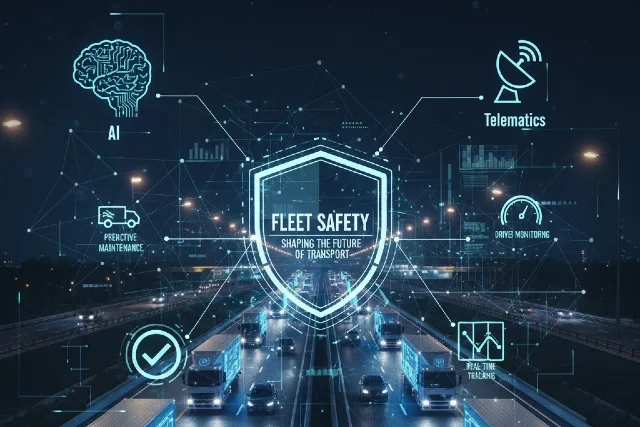
The transportation industry is entering a new era, and Fleet Safety has become one of the most essential priorities for businesses managing commercial vehicles. In the first stages of adopting AI-powered systems, companies are transforming how they track drivers, prevent accidents, and enhance vehicle fleet management safety across all operations. With the rise of advanced telematics and driver safety monitoring systems, organizations can now predict risks before they occur and create safer environments for both drivers and the public. As technology evolves, the future of commercial transport will rely heavily on automated insights, real-time data, and intelligent analytics.
- Understanding Fleet Safety in the Age of AI and Telematics
- The Evolution of Vehicle Fleet Management Safety
- How Driver Safety Monitoring Systems Reduce Accident Risks
- The Role of Predictive Analytics in Fleet Safety Improvement
- Real-World Applications of AI and Telematics in Modern Fleets
- Case Study: How AI Improved Fleet Safety for a Logistics Company
- Why AI and Telematics Are Essential for Commercial Transport Risk Prevention
- Improving Driver Retention Through Enhanced Safety Technologies
- The Future of Fleet Safety: AI Innovations Ahead
- Frequently Asked Questions About AI and Fleet Safety
- Conclusion: How AI and Telematics Are Transforming Fleet Safety
Understanding Fleet Safety in the Age of AI and Telematics
Fleet Safety refers to the strategies, technologies, and practices used to protect drivers, vehicles, cargo, and the public during transportation operations. Traditionally, safety depended on manual checks, training programs, and basic reporting tools. However, the rapid integration of artificial intelligence and telematics has completely transformed this landscape.
Telematics systems gather real-time data from vehicles, such as speed, location, braking, and engine performance. When paired with Artificial Inteligence, these systems can identify patterns in driver behavior, detect hazards early, and offer data-driven recommendations that significantly improve commercial transport risk prevention. Businesses can now predict maintenance needs, track safety violations, and monitor driver habits with unprecedented accuracy.
The Evolution of Vehicle Fleet Management Safety
Vehicle fleet management safety has evolved from simple compliance checklists into a sophisticated system fueled by automation. Companies operating large fleets once depended heavily on human supervisors and routine inspections. Today, telematics sensors and AI algorithms handle much of this oversight.
AI-driven dashboards help fleet managers view all operational details in one place. They receive alerts when a driver speeds, makes harsh turns, brakes suddenly, or becomes distracted. These insights help organizations create better training programs, reduce accident risks, and ensure consistent safety standards across multiple teams and regions. This advancement reflects broader changes in global transportation, where data-based decision-making is becoming the new norm.
How Driver Safety Monitoring Systems Reduce Accident Risks
Driver safety monitoring systems are among the most impactful technologies shaping the future of fleet operations. Using cameras, sensors, and AI, these systems track driver actions in real time to identify risky behavior. Common indicators include distracted driving, drowsiness, rapid acceleration, and delayed braking response.
When the system detects these signs, it can issue instant alerts to the driver to help them correct the behavior. At the same time, managers receive incident reports, enabling them to address deeper problems such as fatigue or inadequate training. These systems are especially valuable in long-haul operations, where fatigue remains one of the leading contributors to roadway accidents.
Companies adopting these technologies have reported measurable improvements in fleet safety outcomes. Many organizations see reduced accident frequency, lower insurance claims, and improved driver satisfaction.
The Role of Predictive Analytics in Fleet Safety Improvement
Predictive analytics has emerged as a key tool in commercial transport risk prevention. Instead of examining incidents after they occur, AI analyzes data from thousands of driving hours and vehicle activities to forecast potential risks. Managers can identify which drivers are most at risk, what routes pose hazards, and which vehicles may require immediate maintenance.
This predictive ability helps companies allocate resources more effectively. They can schedule maintenance before breakdowns occur, prevent delays, and reduce costly downtime. Predictive models also highlight environmental risks such as high-traffic zones, severe weather areas, and dangerous intersections. With this information, fleets can modify schedules, plan alternate routes, and protect drivers from unexpected threats.
Real-World Applications of AI and Telematics in Modern Fleets
Modern fleets across industries are adopting AI and telematics to protect assets and improve operational efficiency. In logistics companies, AI monitors driver performance and uses telematics to optimize routes for safety and fuel efficiency. Delivery drivers receive alerts when road conditions change, while managers track vehicle health to prevent mid-route failures.
Public transportation fleets, including buses and municipal service vehicles, use AI-powered systems to ensure that drivers follow safety protocols. These systems help improve reliability, reduce passenger accidents, and maintain consistent service schedules.
Emergency fleets such as ambulances, fire trucks, and police vehicles rely heavily on telematics. Real-time data enables responders to reach destinations faster while staying safe on the road. AI recommends optimal routes, monitors vehicle performance, and helps emergency departments maintain high response standards.
Case Study: How AI Improved Fleet Safety for a Logistics Company
A major logistics company implemented driver safety monitoring systems combined with telematics tracking for its nationwide fleet. Within the first year, the organization saw a significant reduction in harsh braking incidents and distracted driving cases. AI-generated reports helped managers pinpoint specific behavioral trends that contributed to accidents.
Training programs were then customized based on these insights. Drivers received targeted coaching that addressed their individual risk areas. By the end of the year, accident-related costs dropped substantially, and overall safety compliance improved across multiple departments. This case shows how AI and telematics can reshape operations when implemented effectively.
Why AI and Telematics Are Essential for Commercial Transport Risk Prevention
Commercial transport involves inherent safety risks, including unpredictable road conditions, long driving hours, and mechanical failures. AI and telematics help minimize these risks by offering real-time visibility into operations.
These tools ensure that drivers stay compliant with safety policies and fuel optimization guidelines. They reduce the likelihood of human error by providing automated alerts and performance insights. Moreover, they increase accountability, as every driving decision becomes traceable through objective data.
Fleet managers gain powerful advantages, including comprehensive reports that simplify audits, safety evaluations, and insurance claims. Over time, these improvements lead to more reliable transport services and stronger safety cultures within organizations.
Improving Driver Retention Through Enhanced Safety Technologies
Driver retention has become a major challenge across the transportation industry. Fleet Safety plays a significant role in helping companies retain skilled drivers. Safe working conditions, supported by driver monitoring systems and predictive alerts, contribute to reduced stress levels.
Drivers appreciate systems that help them avoid accidents, remind them to take breaks, and monitor fatigue. These technologies have been shown to improve job satisfaction because they make the driving experience safer and more predictable. Companies that invest in safety technologies often see higher retention rates and reduced recruitment costs.
The Future of Fleet Safety: AI Innovations Ahead
As AI continues to evolve, fleet safety systems will become more intelligent and efficient. Future innovations may include autonomous driving assist features integrated into commercial vehicles. These tools will help drivers maintain safe distances, avoid collisions, and navigate challenging routes.
Advanced telematics will provide even more detailed real-time data, allowing managers to make faster and more accurate decisions. AI may also integrate environmental data such as air quality, road temperature, and dynamic traffic flow to create fully adaptive safety protocols.
Augmented reality dashboards may enhance driver awareness by highlighting hazards directly in their field of vision. Meanwhile, improved machine learning algorithms will help companies identify emerging risks across regional or global operations.
Frequently Asked Questions About AI and Fleet Safety
What is Fleet Safety?
It refers to the procedures and technologies used to protect drivers, vehicles, and cargo during transportation operations.
How does AI improve Fleet Safety?
AI analyzes driving behavior, detects hazards in real time, and predicts risks before they occur, helping prevent accidents.
What are telematics used for in fleet operations?
Telematics track vehicle data such as speed, location, and performance, enabling fleets to monitor safety and improve driver training.
Can driver monitoring systems reduce accidents?
Yes. These systems alert drivers to risky behavior and provide managers with performance insights, resulting in a safer driving environment.
Why is predictive analytics important for fleets?
Predictive tools foresee maintenance issues and behavioral risks, reducing downtime and preventing avoidable accidents.
Conclusion: How AI and Telematics Are Transforming Fleet Safety
The future of transportation depends on the continued evolution of Fleet Safety, supported by AI, telematics, and driver monitoring innovations. As industries adopt automated systems, they gain powerful tools for reducing accidents, enhancing vehicle fleet management safety, and strengthening commercial transport risk prevention. These advancements not only protect drivers but also improve operational efficiency, reduce costs, and create safer roads for everyone. The organizations that embrace AI-powered fleet technology today will shape the future of transport tomorrow, setting new standards for safety, performance, and reliability.